Amorphophallus muelleri — The Golden Veined Titan of Tropical Java
Among the vast diversity of Southeast Asian aroids, Amorphophallus muelleri commands attention through a rare combination of structural elegance, biological intrigue, and formidable tropical presence. Native to the humid forests of Indonesia, particularly Java, the species rises seasonally from a subterranean tuber with extraordinary vigor, producing immense foliage and one of the most visually commanding silhouettes within the genus. Unlike more delicate understory species, Amorphophallus muelleri projects confidence and architectural force while still retaining the atmospheric refinement that collectors prize in mature tropical aroids.
For collectors, the species represents far more than a botanical curiosity. Its dramatic scale, rapid seasonal transformation, and unusually prolific reproductive behavior have elevated it into one of the most respected species within advanced aroid collections. Meanwhile, its deeply textured petioles, expansive canopy structure, and powerful subterranean tuber create a visual identity that feels simultaneously prehistoric and sculptural. Consequently, Amorphophallus muelleri continues to occupy an important position in both botanical cultivation and collector-focused tropical archives.
Botanical Significance
Within the genus, Amorphophallus muelleri holds exceptional botanical significance because of its vigorous growth dynamics and distinctive reproductive strategy. Unlike many related species that rely exclusively on seed production through pollination events, this species frequently develops bulbils along the leaf structure, allowing vegetative propagation directly from mature foliage. This unusual characteristic contributes greatly to its horticultural importance and distinguishes it from many other cultivated Amorphophallus.
Moreover, the species demonstrates remarkable adaptability compared to more environmentally sensitive relatives. While it still reflects the atmospheric richness of tropical rainforest ecosystems, Amorphophallus muelleri often exhibits stronger resilience under cultivation when environmental conditions remain consistently warm and humid. Because of this balance between dramatic appearance and relative cultivation reliability, collectors frequently regard it as one of the foundational large-growing Amorphophallus species for serious tropical collections.
Collector Value
Collectors value Amorphophallus muelleri for its commanding scale, vigorous seasonal emergence, and unmistakable rainforest character. Mature specimens create immediate visual impact, particularly when the immense solitary leaf fully expands and casts layered shadows across surrounding vegetation. The species carries a distinctly primeval atmosphere that resonates strongly within curated tropical displays and rare aroid collections.
Beyond this, the prolific production of bulbils adds another dimension of fascination. Enthusiasts often observe the species closely throughout the growth cycle, anticipating the gradual development of these small vegetative propagules along the leaf architecture. Over time, mature tubers develop extraordinary mass and stability, transforming the plant into a long-term botanical centerpiece rather than a transient seasonal novelty.
Distinctive Morphology
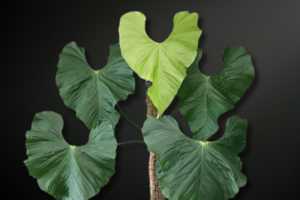
The morphology of Amorphophallus muelleri combines scale with remarkable structural refinement. Its petiole displays intricate camouflage-like mottling composed of olive, bronze, and muted green tones that echo the fragmented textures of rainforest substrates. Above this imposing support structure, the massive leaf canopy expands outward in deeply divided segments that create both density and transparency simultaneously.
Unlike smaller understory species that convey delicacy, Amorphophallus muelleri expresses controlled power. The foliage rises with strong vertical momentum before spreading outward into a broad architectural crown that dominates surrounding space without appearing coarse or rigid. Additionally, mature specimens often develop a sculptural presence reminiscent of tropical tree ferns or ancient cycads, reinforcing the species’ extraordinary visual authority within cultivation.
Habitat & Origin
Amorphophallus muelleri originates primarily from Indonesia, where it inhabits humid tropical forests shaped by seasonal rainfall, volcanic soils, and persistent atmospheric warmth. In habitat, the species develops within fertile organic substrates enriched by decomposing vegetation and mineral-rich forest debris accumulated over generations of ecological cycling.
These tropical ecosystems maintain high humidity and relatively stable thermal conditions throughout much of the year. Meanwhile, filtered sunlight penetrates dense canopy systems in fragmented intervals, creating an ever-changing understory atmosphere defined by shadow, moisture, and biological density. As a result, the species evolved with strong seasonal rhythms closely tied to rainfall patterns and underground energy storage.
Native Environment
In habitat, Amorphophallus muelleri often emerges along forest margins, secondary growth zones, and humid tropical clearings where filtered light reaches the understory more consistently than in deeply shaded rainforest interiors. The surrounding environment remains rich with decomposing organic matter, fungal activity, and layered tropical vegetation that supports rapid seasonal growth.
Additionally, volcanic influence across parts of Java contributes to highly fertile substrate conditions that favor robust tuber development. Moisture remains abundant during active growth periods, while transitional dry intervals help regulate dormancy cycles and underground resource allocation.
Ecological Adaptations
The species exhibits several remarkable adaptations that support its vigorous tropical growth strategy. Its enormous leaf structure maximizes photosynthetic efficiency during the active season, allowing rapid accumulation of energy reserves within the tuber. Meanwhile, bulbil formation provides an additional reproductive mechanism capable of increasing survival opportunities beyond seed production alone.
Because of its strong seasonal metabolism, Amorphophallus muelleri responds dynamically to environmental conditions. Warm temperatures, high humidity, and abundant organic matter stimulate accelerated vegetative expansion, while seasonal dryness triggers dormancy and tuber consolidation. Consequently, the species demonstrates both ecological sophistication and impressive biological efficiency within tropical environments.
Why Collectors Seek Amorphophallus muelleri
Collectors pursue Amorphophallus muelleri because it delivers a rare convergence of dramatic scale, horticultural intrigue, and botanical substance. The species feels monumental without becoming unmanageable, exotic without appearing artificial, and vigorous without losing the atmospheric elegance associated with rainforest aroids.
For many enthusiasts, it represents one of the most satisfying long-term Amorphophallus species to cultivate. Each seasonal cycle introduces visible transformation, from dormant tuber to towering canopy structure. Consequently, the species creates a deeply engaging cultivation experience rooted in observation, anticipation, and progressive maturity.
Rarity
Although more widely cultivated than some exceptionally obscure Amorphophallus, mature high-quality specimens of Amorphophallus muelleri remain highly desirable among collectors. Large tubers with established seasonal vigor command particular admiration because they represent years of successful cultivation and environmental consistency.
Additionally, regional forms and habitat-derived variations occasionally display subtle differences in coloration, vigor, and morphology, further increasing collector interest. Because of this diversity, experienced enthusiasts often continue refining their collections even after acquiring mature specimens.
Architectural Presence
Few tropical aroids produce the same level of architectural dominance as Amorphophallus muelleri. The species occupies space with remarkable compositional strength, creating layered shadows and dramatic vertical movement beneath greenhouse lighting or within tropical landscape settings. Its expansive canopy transforms surrounding environments into immersive botanical scenes rich with texture and depth.
Meanwhile, the mottled petiole contributes visual complexity even during early emergence. As the leaf expands, the plant develops an increasingly sculptural silhouette that feels both engineered and organic, reinforcing its status as one of the most visually compelling members of the genus.
Botanical Interest
From a botanical perspective, Amorphophallus muelleri remains endlessly engaging because of its rapid seasonal growth, bulbil production, and dynamic developmental behavior. The species offers collectors an opportunity to observe substantial morphological transformation within relatively short periods, particularly during vigorous active growth phases.
Additionally, its reproductive strategy continues to attract scientific and horticultural attention. Bulbil formation along the foliage creates an unusual propagation pathway rarely expressed so prominently within large tropical aroids. Consequently, the species occupies an important position not only in cultivation, but also within broader discussions surrounding tropical plant adaptation and reproductive diversity.
Collector’s Perspective
Among experienced aroid enthusiasts, Amorphophallus muelleri often becomes a defining species within the collection itself. Its seasonal emergence introduces anticipation and visual drama that few tropical plants can equal. As the immense leaf unfurls and gradually expands into full maturity, the species reshapes the surrounding environment with a distinctly cinematic presence.
In cultivation, mature specimens develop increasing authority over time. Larger tubers produce more substantial foliage, stronger structural proportions, and increasingly stable growth cycles. Additionally, the appearance of bulbils along the leaf adds another layer of fascination that encourages continuous observation throughout the season.
Ultimately, Amorphophallus muelleri embodies the essence of serious tropical plant collecting: botanical scale, ecological complexity, and immersive visual power unified within a single extraordinary species. Its enduring appeal lies not merely in rarity, but in the remarkable experience of witnessing one of Southeast Asia’s most architecturally commanding aroids emerge anew each season.
Looking for Rare Amorphophallus Species?
Explore our collection of rare tubers, seeds, and exotic aroids directly from Indonesia. Carefully prepared for international shipping.