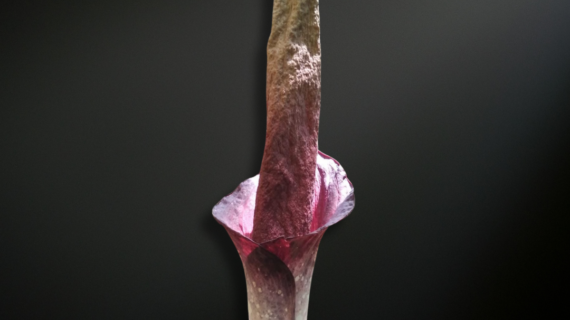
Amorphophallus borneensis — The Shadowed Giant of Borneo
Within the ancient rainforests of Borneo, Amorphophallus borneensis emerges from deep organic soils with an atmosphere that feels both primeval and refined. The species reflects the immense ecological richness of one of the world’s oldest tropical forest systems, where humidity saturates the understory and filtered green light drifts through towering canopy layers. Although less widely known than some monumental relatives, Amorphophallus borneensispossesses a distinctive rainforest grandeur that captivates collectors through texture, scale, and powerful architectural form.
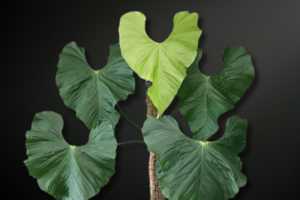
Unlike species valued primarily for dramatic inflorescences alone, Amorphophallus borneensis commands attention throughout its entire seasonal cycle. The immense marbled petiole rises with sculptural authority before supporting a vast divided canopy that transforms surrounding space into layered tropical shadow. Meanwhile, the flowering phase introduces a darker and more enigmatic visual intensity characteristic of deeply forest-adapted aroids. Consequently, the species has become highly regarded among collectors focused on rare Bornean flora and advanced tropical understory cultivation.
Botanical Significance
Amorphophallus borneensis holds considerable botanical significance because of its ecological specialization, substantial growth potential, and connection to the ancient rainforest systems of Borneo. The species represents an important component of Southeast Asian tropical understory diversity, demonstrating the remarkable evolutionary complexity that emerged within isolated equatorial forest environments.
Moreover, the species exemplifies the highly efficient seasonal growth strategy characteristic of giant tuberous aroids. In habitat, stable warmth, deep organic substrates, and intense competition for filtered light favored the development of substantial subterranean storage organs and expansive foliage architecture. Because of this adaptation, Amorphophallus borneensis occupies a compelling position among collectors interested in rainforest ecology, giant aroids, and Bornean endemic flora.
Collector Value
Collectors value Amorphophallus borneensis for its impressive architectural scale, atmospheric rainforest character, and relative scarcity in cultivation. Mature specimens possess a commanding tropical presence capable of reshaping surrounding growing environments through canopy breadth and structural rhythm.
Additionally, the species remains uncommon outside specialized collections due to limited propagation and the long-term commitment required for mature development. Because of this rarity, well-established specimens often acquire considerable prestige among enthusiasts focused on rare Southeast Asian Amorphophallus and large-form tropical aroids.
Distinctive Morphology
The morphology of Amorphophallus borneensis combines immense structural power with refined rainforest elegance. The petiole frequently displays elaborate marbling patterns reminiscent of weathered bark, moss-covered stone, and volcanic mineral surfaces found throughout humid tropical forests. Above this support structure, the divided canopy expands into broad layered segments that create deep understory shadow beneath the foliage.
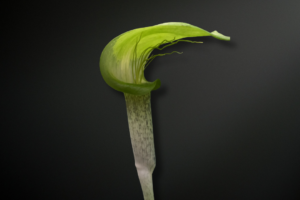
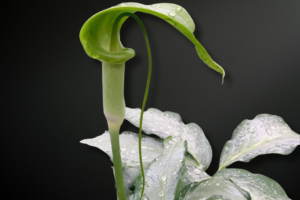
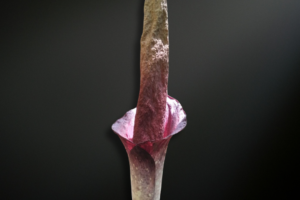
Meanwhile, the inflorescence introduces dramatic visual contrast through its sculptural proportions and dark tonal complexity. The spathe and spadix composition evokes the biological intensity characteristic of rainforest carrion-pollinated aroids while maintaining an unusually sophisticated visual balance. As a result, flowering specimens often become defining highlights within advanced tropical collections.
Habitat & Origin
Amorphophallus borneensis originates from Borneo, where it inhabits humid lowland and submontane rainforest ecosystems shaped by abundant rainfall, deep organic substrates, and dense canopy cover. These ancient forests support extraordinary biodiversity and provide ideal ecological conditions for large tropical aroids.
In habitat, the species develops within rich rainforest soils layered with decomposing vegetation, mineral sediment, and continuously cycling forest humus. Meanwhile, filtered tropical light and elevated atmospheric moisture support rapid seasonal canopy emergence followed by gradual dormancy as environmental conditions shift.
Native Environment
Within its natural range, Amorphophallus borneensis frequently occurs in deeply shaded rainforest interiors where immense canopy trees moderate temperature, moisture, and illumination across the forest floor. The surrounding atmosphere remains warm, humid, and saturated with organic decay characteristic of mature equatorial ecosystems.
Additionally, Borneo’s ancient geological history contributes strongly to the richness of the species’ habitat. Constant biological decomposition combined with stable tropical rainfall creates highly fertile yet aerated substrates capable of supporting substantial subterranean tubers over many seasonal cycles.
Ecological Adaptations
The subterranean tuber of Amorphophallus borneensis functions as a substantial energy reservoir that supports rapid foliage expansion during favorable tropical conditions. During active growth, the species accumulates considerable biomass before retreating into dormancy as ecological rhythms shift subtly throughout the year.
Meanwhile, the expansive canopy evolved to maximize light interception within dim rainforest understories where filtered illumination remains limited and highly competitive. The elevated petiole structure positions the foliage above surrounding understory vegetation while improving airflow and access to diffuse tropical light gradients. Because of these adaptations, Amorphophallus borneensis demonstrates exceptional ecological efficiency within densely layered equatorial forest environments.
Why Collectors Seek Amorphophallus borneensis
Collectors pursue Amorphophallus borneensis because it combines giant tropical scale with an unusually atmospheric rainforest identity. The species introduces a level of ecological authenticity and structural immersion rarely replicated by conventional ornamental plants, evoking the humid depth and shadowed complexity of ancient Bornean forest interiors.
For advanced enthusiasts, the species also represents a meaningful long-term cultivation achievement. Mature specimens require patience, environmental stability, and careful seasonal management, greatly enhancing the prestige associated with established plants. Consequently, Amorphophallus borneensis often becomes a central specimen within elite tropical aroid collections.
Rarity
Although respected among specialist collectors, Amorphophallus borneensis remains genuinely uncommon in cultivation, particularly as mature flowering specimens. Limited propagation, substantial space requirements, and relatively slow long-term establishment contribute strongly to its scarcity.
Because of this rarity, mature tubers frequently acquire significant collector value. Enthusiasts focused on Bornean flora and giant tropical aroids often regard the species as an essential representative of Southeast Asia’s ancient rainforest biodiversity.
Architectural Presence
Few rainforest aroids possess the same combination of scale, density, and compositional balance displayed by mature Amorphophallus borneensis. The immense canopy generates layered tropical shadow while transforming surrounding space through structural depth and visual weight. Meanwhile, the marbled petiole reinforces the species’ connection to humid equatorial forest environments.
Rather than appearing overtly ornamental, the plant evokes the atmosphere of untouched rainforest ecology shaped by moisture, decomposition, and filtered green light. This immersive architectural quality contributes greatly to its enduring fascination among serious collectors.
Botanical Interest
From a botanical perspective, Amorphophallus borneensis offers valuable insight into the ecological diversity of giant tropical tuberous aroids within ancient rainforest ecosystems. Its substantial biomass production, seasonal growth rhythm, and highly specialized understory adaptation distinguish it clearly from smaller and more generalized relatives.
Additionally, the species serves as an important representative of Borneo’s increasingly threatened rainforest flora. For collectors and botanists alike, Amorphophallus borneensis embodies both the grandeur and ecological vulnerability of one of the planet’s richest tropical environments.
Collector’s Perspective
Among experienced aroid enthusiasts, Amorphophallus borneensis often becomes admired for the atmosphere it creates as much as for its physical scale. The emergence of a mature canopy introduces deep tropical shadow, immense structural rhythm, and a distinctly rainforest presence that transforms cultivation spaces into immersive ecological displays.
In cultivation, mature tubers gradually produce increasingly balanced foliage with greater architectural depth and stronger seasonal vigor over successive cycles. The species develops a sense of permanence and botanical gravity rarely matched within cultivated tropical collections.
Ultimately, Amorphophallus borneensis embodies the shadowed grandeur of the Bornean rainforest itself. Its enduring appeal emerges through rarity, immense tropical architecture, and its extraordinary ability to evoke the humid ecological depth of one of Earth’s oldest forest systems.
Looking for Rare Amorphophallus Species?
Explore our collection of rare tubers, seeds, and exotic aroids directly from Indonesia. Carefully prepared for international shipping.