Amorphophallus bulbifer — The Jewel-Leafed Aroid of Monsoon Forests
Among the most charismatic and horticulturally distinctive members of the genus, Amorphophallus bulbifer occupies a unique space where botanical elegance meets unusual reproductive adaptation. Unlike many of its darker and more austere relatives, the species carries a softer tropical refinement expressed through graceful canopy architecture, luminous petiole patterning, and the remarkable production of aerial bulbils that emerge directly from the leaf structure itself.
In habitat, Amorphophallus bulbifer rises seasonally from humid forest floors shaped by monsoon rainfall, warm temperatures, and filtered canopy light. During active growth, the plant projects a poised and almost ornamental silhouette above decomposing leaf litter. Meanwhile, the inflorescence introduces a more atmospheric expression — sculptural, shadowed, and unmistakably tied to rainforest ecology.
What distinguishes Amorphophallus bulbifer most profoundly, however, is its balance between accessibility and fascination. The species remains deeply botanical and collector-worthy, yet it also adapts more readily to cultivation than many highly specialized Amorphophallus taxa. Consequently, it has become both an important gateway species for serious aroid collectors and a respected botanical subject in its own right.
Botanical Significance
Collector Value
Within cultivated aroid collections, Amorphophallus bulbifer holds enduring significance due to its elegant morphology, reliable growth rhythm, and unusual reproductive strategy. The production of aerial bulbils along the leaf surface immediately separates the species from most other members of the genus and contributes greatly to its horticultural identity.
Moreover, mature specimens develop increasingly dramatic canopy structure and stronger floral presentation over successive seasons. Consequently, long-cultivated plants often acquire a highly refined and sculptural presence appreciated by collectors at every level of experience.
For collectors, the species offers a particularly rewarding seasonal rhythm. Each emergence combines vigorous growth with subtle variation in foliage architecture, petiole coloration, and bulbil production.
Distinctive Morphology
The canopy of Amorphophallus bulbifer rises elegantly above the substrate on a mottled petiole patterned in soft olive, ash-grey, bronze, and muted green tones. Suspended above this structure, the finely dissected leaf creates a broad and balanced tropical canopy with remarkable lightness and symmetry.
Its most distinctive feature, however, lies in the bulbils that form along the upper leaf divisions. These aerial propagules emerge almost jewel-like against the foliage, introducing a highly unusual reproductive adaptation rarely encountered among tropical geophytes.
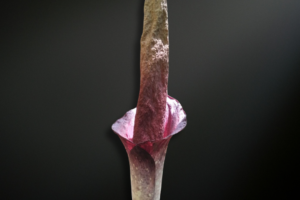
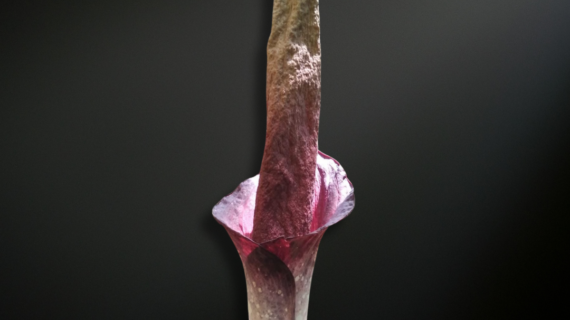
Meanwhile, the inflorescence presents a softer yet deeply atmospheric beauty compared with darker and more heavily textured relatives. The spathe frequently displays muted pink, dusky rose, or smoky mauve tones that glow subtly beneath humid greenhouse light.
Unlike colossal species that overwhelm through sheer scale, Amorphophallus bulbifer captivates through elegance, rhythm, and refined botanical individuality.
Habitat & Origin
Native Environment
Amorphophallus bulbifer originates from tropical and subtropical forest regions across South and Southeast Asia, where monsoonal rainfall patterns shape highly seasonal growth cycles. In habitat, the species develops among decomposing organic matter, loose forest soils, shaded understory clearings, and humid leaf-litter environments.
Filtered sunlight reaches the forest floor intermittently through shifting canopy layers, creating warm but subdued growing conditions. Consequently, the species evolved to maximize rapid seasonal development during humid periods while retreating entirely below ground during dormancy.
Meanwhile, seasonal moisture fluctuations strongly influence the plant’s annual rhythm of emergence, active growth, flowering, and senescence.
Ecological Adaptations
Like many geophytic aroids, Amorphophallus bulbifer survives through a subterranean tuber capable of storing nutrients and moisture between active growth phases. This adaptation allows the species to endure temporary dry periods while preserving energy for future canopy and floral development.
Its aerial bulbils represent an especially remarkable ecological strategy. Rather than relying solely on seed production or tuber division, the species propagates vegetatively through detachable bulbils capable of developing independently after separation.
Additionally, the inflorescence participates in carrion-pollination ecology involving thermogenesis, scent production, and specialized insect attraction. Beyond this ecological role, flowering contributes significantly to the species’ collector appeal and atmospheric presence.
Why Collectors Seek Amorphophallus bulbifer
Rarity
Although more widely cultivated than many highly obscure Amorphophallus species, exceptional forms and mature flowering specimens of Amorphophallus bulbifer remain deeply desirable among collectors. Certain regional variants displaying intensified coloration, stronger bulbil production, or unusual foliage character attract particular interest within specialist aroid circles.
Moreover, the species occupies an important place within botanical collections because it demonstrates unusual reproductive behavior rarely encountered among tropical geophytes. As a result, Amorphophallus bulbifer maintains strong appeal across both horticultural and botanical communities.
For many collectors, the species becomes a foundational introduction to the wider complexity of the genus.
Architectural Presence
Despite its comparatively moderate scale, Amorphophallus bulbifer possesses remarkable visual sophistication. The elevated canopy, mottled petiole, and suspended bulbils create a layered composition that feels simultaneously tropical and highly refined.
In cultivation, the species pairs beautifully with moss-covered stone, dark ceramic vessels, shaded greenhouse staging, and rainforest-inspired understory displays. Beyond this, the transition from dormant tuber to fully expanded canopy introduces a compelling sense of seasonal transformation.
Collectors frequently describe mature specimens as graceful rather than dramatic — elegant expressions of rainforest adaptation shaped through rhythm and balance.
Botanical Interest
From a botanical perspective, Amorphophallus bulbifer offers exceptional insight into vegetative reproductive adaptation within tropical aroids. Its aerial bulbil production distinguishes it sharply from most other members of the genus and contributes significantly to its scientific and horticultural fascination.
Unlike species cultivated solely for floral spectacle, this plant rewards long-term observation across every stage of its growth cycle. Over time, subtle changes in canopy complexity, bulbil production, and tuber maturity gradually reveal increasing sophistication.
Ultimately, the species appeals equally to dedicated collectors, botanical observers, and growers seeking a refined yet approachable introduction to geophytic aroid cultivation.
Collector’s Perspective
Cultivating Amorphophallus bulbifer often becomes an immersive seasonal ritual. During dormancy, the tuber rests invisibly beneath the substrate while preserving the reserves necessary for future growth. Then, once warmth and humidity return, rapid emergence transforms the growing space with extraordinary speed and vitality.
Meanwhile, the appearance of bulbils across the canopy introduces a uniquely satisfying stage in the growth cycle. These suspended structures create the impression of living ornamentation woven directly into the foliage architecture.
Over time, mature specimens gain stronger structural balance, increased bulbil production, and more refined floral presentation. Because of this progression, collectors frequently maintain individual plants across many years and seasonal cycles.
Flowering Characteristics
The inflorescence of Amorphophallus bulbifer carries a softer and more refined atmosphere than many darker or more aggressive-looking relatives. Muted pink, dusky mauve, or smoky rose coloration frequently appears across the spathe, creating elegant tonal depth beneath humid tropical light.
Flowering generally precedes leaf emergence, allowing the tuber to concentrate stored energy entirely toward reproductive development. Additionally, thermogenic activity and decomposition-associated scent production support specialized pollination strategies adapted to carrion insects.
Although the bloom remains relatively brief, its understated elegance leaves strong impression among collectors who appreciate atmospheric floral structure over sheer scale.
Comparison With Related Species
Compared with giant species such as Amorphophallus titanum, Amorphophallus bulbifer expresses a more intimate and horticulturally approachable beauty. Rather than overwhelming through monumental scale, it captivates through reproductive uniqueness, canopy elegance, and seasonal rhythm.
In contrast to darker species characterized by intense floral drama, this plant maintains a softer visual language defined by balance and refinement. Because of this, collectors frequently regard it as one of the most versatile and rewarding cultivated species within the genus.
Additionally, its comparatively adaptable nature allows successful long-term cultivation across a wider range of tropical and subtropical growing environments.
Looking for Rare Amorphophallus Species?
Explore our collection of rare tubers, seeds, and exotic aroids directly from Indonesia. Carefully prepared for international shipping.