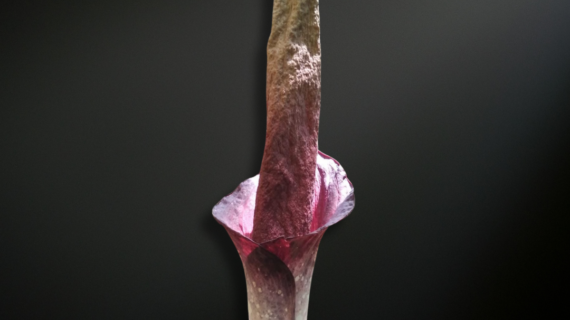
Amorphophallus sagittarius — The Arrow-Formed Relic of Tropical Forest Shadows
Among the more obscure and intellectually captivating members of the genus, Amorphophallus sagittarius possesses an atmosphere shaped by precision, tension, and tropical restraint. The species does not rely on monumental scale or flamboyant ornamentation to establish its presence. Instead, it reveals itself through elegant proportions, distinctive floral geometry, and a subtle architectural rhythm that resonates deeply with experienced aroid collectors.
In habitat, Amorphophallus sagittarius emerges seasonally from the rainforest floor with an almost ceremonial quality. Its solitary canopy rises above decomposing organic matter while the inflorescence introduces a darker, more sculptural dimension to the surrounding understory. Moreover, the species carries the transient beauty characteristic of geophytic aroids: a cycle of sudden emergence, intense vitality, and eventual retreat into dormancy beneath the soil surface.
The species name “sagittarius,” evoking the image of an arrow or archer, reflects the sharply directional qualities often associated with its floral structure and overall silhouette. Because of this, Amorphophallus sagittarius feels unusually dynamic compared with broader or more heavily textured relatives. For collectors, the plant embodies a refined intersection between botanical rarity and atmospheric elegance.
Botanical Significance
Collector Value
Within advanced aroid collections, Amorphophallus sagittarius occupies a niche reserved for species appreciated primarily through close observation rather than overt spectacle. The plant rewards patience, environmental understanding, and long-term cultivation, qualities that naturally attract dedicated collectors rather than casual growers.
Moreover, cultivated material remains relatively scarce, particularly outside specialized Southeast Asian collections. Consequently, mature specimens hold significant archival appeal among enthusiasts focused on lesser-known Amorphophallus species.
For collectors, the fascination often intensifies over successive growth cycles. Subtle variation in canopy architecture, floral coloration, and seasonal vigor gradually reveals the species’ complexity over time.
Distinctive Morphology
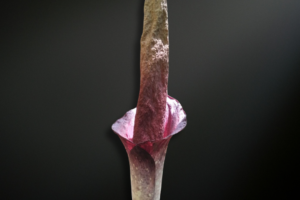
The visual identity of Amorphophallus sagittarius centers around elegant structural tension. Its inflorescence frequently displays elongated or directional proportions that create a sharply sculptural appearance within humid tropical settings. In contrast to heavily ruffled or massively inflated species, this plant conveys refinement through line and balance.
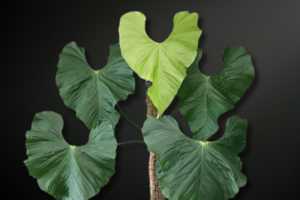
Meanwhile, the petiole often exhibits muted camouflage patterning in olive, grey-green, and earthy bronze tones that blend naturally with rainforest debris. Above this rises a finely divided canopy suspended with remarkable poise above the substrate.
Additionally, the floral chamber introduces dramatic shadow and depth during anthesis. Under filtered greenhouse lighting, the inflorescence appears almost carved rather than grown, reinforcing the species’ cinematic quality.
Habitat & Origin
Native Environment
Amorphophallus sagittarius originates from humid tropical forest ecosystems within Southeast Asia, where dense canopy cover creates subdued illumination and consistently warm atmospheric conditions. In habitat, the species develops among thick layers of leaf litter, decomposing wood, moss-covered stone, and mineral-rich organic matter.
Seasonal rainfall patterns strongly influence its growth rhythm. During wet periods, active emergence occurs rapidly, while drier intervals encourage complete dormancy beneath the soil surface. Consequently, the species evolved to exploit brief windows of favorable environmental stability.
Meanwhile, filtered rainforest light shapes its morphology by encouraging broad yet efficient canopy development capable of maximizing photosynthesis under dim understory conditions.
Ecological Adaptations
Like many geophytic aroids, Amorphophallus sagittarius survives through a subterranean tuber that stores nutrients and moisture during dormancy. This adaptation allows the species to retreat entirely below ground when environmental conditions become less favorable.
Its solitary leaf architecture reflects extraordinary ecological efficiency. Rather than sustaining multiple leaves year-round, the plant channels stored energy into one highly functional canopy supported by a singular petiole.
Additionally, the inflorescence participates in sophisticated carrion-pollination ecology. Scent production, thermogenic activity, and floral timing interact to attract specialized insects associated with decompositional rainforest environments. Although biologically functional, this process also contributes to the species’ haunting ornamental appeal.
Why Collectors Seek Amorphophallus sagittarius
Rarity
Authentic cultivated specimens remain uncommon within international cultivation, particularly among collectors outside specialist aroid circles. Because propagation progresses slowly and flowering requires maturity and environmental consistency, the species maintains a distinctly elusive reputation.
Moreover, many collectors pursue Amorphophallus sagittarius specifically because of its understated rarity. Unlike widely circulated ornamental aroids, it occupies a quieter and more exclusive position within botanical collections.
As a result, mature specimens frequently become centerpiece plants among curated geophytic aroid displays.
Architectural Presence
Despite its relatively moderate scale, Amorphophallus sagittarius projects extraordinary structural elegance. The elevated canopy, directional floral form, and muted rainforest coloration create a composition that feels simultaneously prehistoric and refined.
In cultivation, the species pairs beautifully with volcanic stone, aged hardwood, moss-lined containers, and tropical understory displays designed to evoke humid Southeast Asian forest conditions. Beyond this, the dramatic seasonal transition between dormancy and emergence enhances its emotional presence within a collection.
Collectors often describe the species as sculptural rather than decorative.
Botanical Interest
From a botanical perspective, Amorphophallus sagittarius offers compelling insight into the diversity of Southeast Asian geophytic aroids. Its floral anatomy, seasonal behavior, and restrained morphology distinguish it clearly from larger or more heavily ornamented relatives.
Unlike giant species that dominate visually through scale, this plant rewards intimacy and careful study. Over time, subtle changes in tuber maturity, canopy posture, and floral expression reveal increasing complexity.
Ultimately, the species appeals most strongly to collectors who appreciate rarity expressed through detail, atmosphere, and ecological authenticity.
Collector’s Perspective
Cultivating Amorphophallus sagittarius often becomes an exercise in attentiveness and seasonal observation. During dormancy, the tuber rests invisibly beneath the substrate, preserving energy for the next cycle of emergence. Then, with remarkable speed, new growth appears once warmth and moisture stabilize.
Meanwhile, flowering transforms the species into something deeply atmospheric. The inflorescence introduces a fleeting yet unforgettable presence that many collectors consider the emotional centerpiece of cultivation.
Over time, mature tubers develop greater vigor and increasingly dramatic seasonal expression. Because of this gradual progression, growers frequently develop strong attachment to individual specimens cultivated across many years.
Flowering Characteristics
The inflorescence of Amorphophallus sagittarius possesses a distinctly directional elegance that separates it from broader or more heavily textured species within the genus. Dark internal surfaces contrast against more muted outer coloration, producing depth and shadow within the floral chamber.
Flowering typically precedes leaf emergence, allowing the tuber to allocate stored resources entirely toward reproduction. Additionally, thermogenic activity and decomposition-associated scent compounds support highly specialized pollination strategies linked to carrion insects.
Although anthesis remains brief, the event carries remarkable intensity under humid tropical conditions. The bloom feels less ornamental than elemental — an expression of rainforest ecology condensed into sculptural form.
Comparison With Related Species
Compared with massive species such as Amorphophallus titanum, Amorphophallus sagittarius expresses a quieter and more intellectual beauty. Rather than overwhelming through scale, it captivates through line, proportion, and restrained complexity.
In contrast to species with heavily ornate spathes or exaggerated textures, Amorphophallus sagittarius maintains an elegant minimalism rooted in forest camouflage and structural refinement. Because of this, advanced collectors often regard it as one of the more sophisticated species within curated geophytic collections.
Additionally, its manageable size allows cultivation in specialized greenhouse environments where larger species become impractical over time.
Looking for Rare Amorphophallus Species?
Explore our collection of rare tubers, seeds, and exotic aroids directly from Indonesia. Carefully prepared for international shipping.