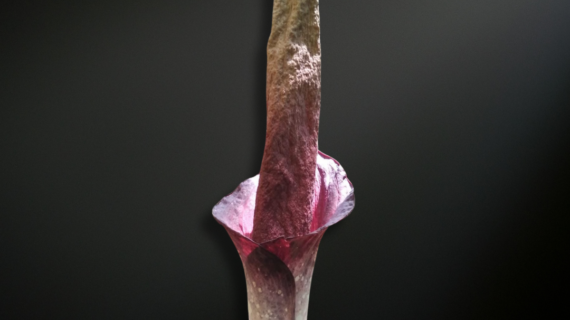
Amorphophallus spectabilis — The Spectral Jewel of Javan Rainforests
Within the volcanic forests of Java, where mist settles over limestone ravines and monsoon humidity saturates the understory, Amorphophallus spectabilis emerges with an atmosphere that feels almost unreal. The species carries the refined theatricality that defines the most captivating members of the genus: a solitary architectural canopy, intricately patterned petioles, and an inflorescence whose coloration and structure appear sculpted from shadow and polished velvet rather than living tissue.
Unlike larger Amorphophallus species that dominate through sheer scale, Amorphophallus spectabilis commands attention through sophistication and contrast. Its presence feels curated by the rainforest itself. During active growth, the foliage rises elegantly above the forest floor, while flowering introduces one of the most visually arresting moments within tropical aroid cultivation. Because of this, the species occupies a near-mythic reputation among collectors focused on rare Indonesian geophytes.
For experienced growers, Amorphophallus spectabilis represents more than botanical rarity alone. It embodies the atmospheric beauty of Southeast Asian rainforest ecology — transient, dramatic, and deeply seasonal.
Botanical Significance
Collector Value
Among advanced aroid enthusiasts, Amorphophallus spectabilis remains one of the most admired Indonesian species due to its extraordinary floral presentation and relative scarcity in cultivation. The species combines refined proportions with striking pigmentation, creating a visual identity that feels simultaneously elegant and primal.
Moreover, mature flowering specimens remain exceptionally uncommon outside specialized collections. Consequently, the species has become highly sought after among collectors who prioritize uncommon morphology over sheer size. Its rarity within cultivation further strengthens its archival value, particularly among those focused on endemic Javan flora.
For collectors, the fascination often intensifies over time. Each growth cycle reveals subtle variation in coloration, inflorescence form, and vegetative structure, rewarding long-term observation rather than immediate spectacle.
Distinctive Morphology
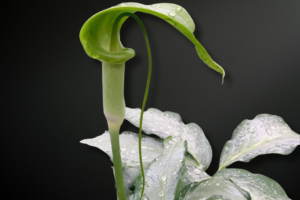
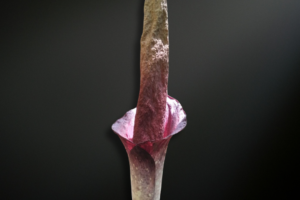
The defining beauty of Amorphophallus spectabilis lies in its remarkable balance between delicacy and intensity. Its inflorescence typically displays dramatic tonal contrast, with dark internal surfaces juxtaposed against lighter exterior coloration and sculptural folds. Under humid tropical lighting, these textures appear almost iridescent.
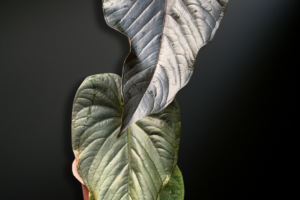
Meanwhile, the petiole carries intricate camouflage-like mottling in olive, grey, bronze, and deep green tones. Above this rises a finely divided canopy suspended with remarkable precision over the substrate.
Unlike species that rely primarily on gigantism, Amorphophallus spectabilis captivates through detail. The floral chamber, spadix proportions, and layered spathe architecture create a composition that feels unusually refined for a carrion-pollinated aroid. Because of this, flowering specimens frequently become centerpiece plants within private tropical collections.
Habitat & Origin
Native Environment
Amorphophallus spectabilis originates from Java, Indonesia, where it inhabits humid tropical forest systems shaped by volcanic geology, monsoonal rainfall, and dense canopy cover. In habitat, the species grows among deep organic debris, moss-covered stone, and decomposing forest matter rich in mineral content.
The surrounding atmosphere remains warm and moisture-laden throughout much of the year. Filtered light penetrates through layered rainforest canopy, creating subdued illumination across the understory. Consequently, the species evolved to maximize growth efficiency under stable tropical humidity and diffused light conditions.
Meanwhile, seasonal rainfall patterns strongly influence the plant’s annual growth cycle. Active emergence often coincides with periods of sustained warmth and elevated moisture.
Ecological Adaptations
Like many geophytic aroids, Amorphophallus spectabilis survives through a subterranean tuber that stores both nutrients and moisture reserves during dormancy. This adaptation allows the species to retreat completely beneath the soil surface during less favorable conditions while preserving energy for future emergence.
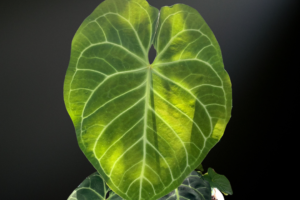
Its solitary leaf architecture reflects extraordinary ecological efficiency. Rather than maintaining multiple leaves year-round, the plant channels seasonal resources into a single highly functional canopy capable of harvesting filtered rainforest light with precision.
Additionally, the inflorescence demonstrates sophisticated pollination strategies associated with carrion ecology. Thermogenic activity, scent production, and floral timing combine to attract specialized insects within the rainforest ecosystem. Although biologically functional, the flowering process also contributes significantly to the species’ haunting ornamental appeal.
Why Collectors Seek Amorphophallus spectabilis
Rarity
Authentic cultivated specimens remain exceptionally scarce outside dedicated aroid collections and specialist botanical networks. Because propagation occurs slowly and flowering specimens require maturity and environmental stability, the species retains a distinctly elusive reputation.
Moreover, habitat pressure across parts of Java continues to heighten collector interest in preserving endemic Indonesian Amorphophallus species within cultivation. As a result, Amorphophallus spectabilis carries importance not only as a collector’s plant, but also as a living botanical archive.
For many growers, encountering a mature flowering specimen in person remains a rare experience.
Architectural Presence
Although relatively compact compared with giant Amorphophallus species, Amorphophallus spectabilis projects remarkable visual drama through proportion, coloration, and texture. The inflorescence rises with sculptural elegance above the substrate, while the foliage creates a suspended canopy effect that enhances its rainforest character.
In cultivation, the species pairs beautifully with volcanic stone, aged hardwood, dark ceramic containers, and humid tropical displays designed to evoke Southeast Asian understory environments. Beyond this, the dramatic transition between dormancy and emergence adds an almost ceremonial quality to its seasonal cycle.
Consequently, collectors frequently regard the species as living botanical sculpture rather than ornamental foliage alone.
Botanical Interest
From a botanical perspective, Amorphophallus spectabilis offers exceptional insight into the diversity of Indonesian geophytic aroids. Its floral structure, seasonal behavior, and ecological specialization distinguish it clearly from more widespread species.
Unlike highly commercialized tropical plants, this species rewards patient study and close observation. Subtle shifts in spathe coloration, canopy architecture, and tuber maturity gradually reveal themselves over successive years of cultivation.
Ultimately, the plant appeals most strongly to collectors drawn toward rarity expressed through atmosphere and refinement rather than excessive scale.
Collector’s Perspective
Cultivating Amorphophallus spectabilis often becomes a deeply immersive seasonal ritual. During dormancy, the tuber rests invisibly beneath the substrate, preserving the energy required for its next emergence. Then, almost suddenly, vigorous growth resumes with remarkable speed once warmth and humidity stabilize.
Meanwhile, flowering introduces an entirely different emotional experience. The bloom appears temporary yet unforgettable — a brief expression of rainforest ecology condensed into sculptural form. Many collectors consider this fleeting transformation the defining reward of long-term cultivation.
Over time, mature specimens develop stronger seasonal vigor and increasingly dramatic floral structure. Because of this gradual evolution, growers often form unusually strong attachment to individual plants.
Flowering Characteristics
The inflorescence of Amorphophallus spectabilis ranks among the most visually sophisticated within the genus. Dark internal pigmentation contrasts beautifully against the outer spathe surface, creating depth and dimensionality rarely captured accurately in photographs.
Flowering generally occurs before leaf production, allowing the tuber to direct stored energy entirely toward reproductive development. Additionally, the bloom produces scent compounds and thermogenic activity associated with specialized carrion pollination strategies.
Despite its relatively brief duration, anthesis remains profoundly atmospheric. Under humid tropical conditions, the inflorescence feels less like a conventional flower and more like a living rainforest phenomenon.
Comparison With Related Species
Compared with monumental species such as Amorphophallus titanum, Amorphophallus spectabilis expresses a more intimate and refined aesthetic. Rather than relying on immense scale, it captivates through floral proportion, coloration, and sculptural precision.
In contrast to species with heavily textured or exaggerated forms, Amorphophallus spectabilis maintains a remarkable balance between elegance and biological strangeness. Because of this, advanced collectors frequently place it among the most visually rewarding Indonesian species in cultivation.
Additionally, its more manageable size allows integration into highly curated greenhouse collections where larger species become impractical over time.
Looking for Rare Amorphophallus Species?
Explore our collection of rare tubers, seeds, and exotic aroids directly from Indonesia. Carefully prepared for international shipping.