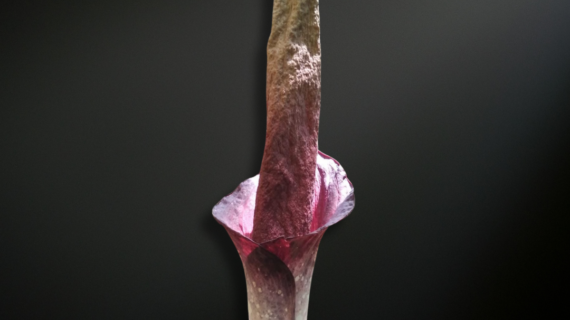
Amorphophallus infundibuliformis — The Funnel-Spathed Relic of Monsoon Forests
Among the lesser-known yet deeply compelling members of the genus, Amorphophallus infundibuliformis possesses a presence defined by unusual floral geometry, humid forest atmosphere, and refined structural elegance. The species does not overwhelm through colossal scale or excessive ornamentation. Instead, it captivates through form, proportion, and the haunting botanical tension that characterizes the most sophisticated tropical geophytes.
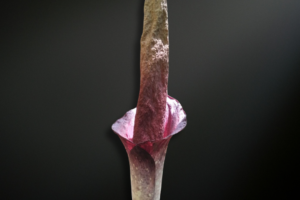
Its name, derived from the funnel-shaped architecture of the inflorescence, reflects one of the species’ most striking characteristics. During anthesis, the bloom appears sculpted rather than grown — a dramatic convergence of curvature, shadow, and texture emerging from the rainforest floor with almost ceremonial intensity.
In habitat, Amorphophallus infundibuliformis rises seasonally from beneath decomposing forest debris and mineral-rich soils shaped by monsoon cycles and tropical humidity. Meanwhile, dormancy conceals the entire organism beneath the substrate, preserving the tuber as a silent reservoir of future growth. Because of this cyclical rhythm, collectors often experience the species as fleeting and atmospheric rather than continuously ornamental.
For advanced aroid enthusiasts, Amorphophallus infundibuliformis represents a remarkable balance between rarity, ecological authenticity, and sculptural botanical beauty.
Botanical Significance
Collector Value
Within specialized Amorphophallus collections, Amorphophallus infundibuliformis remains especially admired for its distinctive floral architecture and understated rarity. Unlike heavily cultivated species selected primarily for dramatic size, this plant appeals to collectors who value subtle morphology, structural refinement, and unusual inflorescence form.
Moreover, cultivated specimens remain relatively uncommon outside dedicated tropical aroid collections. Consequently, mature flowering plants hold strong archival appeal among enthusiasts focused on rare Southeast Asian geophytes.
For collectors, the species becomes increasingly rewarding over time. Each seasonal emergence reveals more pronounced canopy development, stronger floral structure, and deeper atmospheric presence as the tuber matures.
Distinctive Morphology
The defining feature of Amorphophallus infundibuliformis lies in its funnel-shaped spathe architecture. The inflorescence often narrows and curves with remarkable fluidity, creating a floral silhouette unlike broader or more heavily textured relatives within the genus.
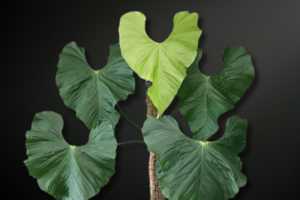
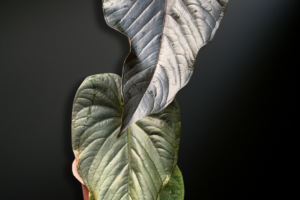
Meanwhile, the petiole commonly displays muted camouflage patterning in olive-green, bronze, and ash-grey tones that mirror tropical forest substrates. Above this rises a finely divided canopy elevated with elegant balance above the soil surface.
In contrast to species with aggressively ornate floral forms, Amorphophallus infundibuliformis communicates sophistication through contour and proportion. Under humid greenhouse lighting, the bloom develops extraordinary visual depth, particularly during peak anthesis.
Habitat & Origin
Native Environment
Amorphophallus infundibuliformis originates from humid tropical and monsoonal forest regions of Southeast Asia, where dense canopy cover, mineral-rich substrates, and seasonal rainfall create highly dynamic ecological conditions.
In habitat, the species develops among decomposing leaf litter, porous soils, moss-covered stone, and organically enriched forest debris beneath subdued understory light. Filtered illumination reaches the forest floor intermittently, creating shifting patterns of humidity and shadow throughout the day.
Meanwhile, monsoon cycles strongly influence the species’ annual rhythm. Sustained rainfall encourages vigorous emergence and active growth, while drier intervals initiate complete dormancy beneath the substrate.
Ecological Adaptations
Like many geophytic aroids, Amorphophallus infundibuliformis survives through a subterranean tuber capable of storing moisture and nutrients between active growth periods. This adaptation allows the species to retreat entirely below ground during less favorable environmental conditions.
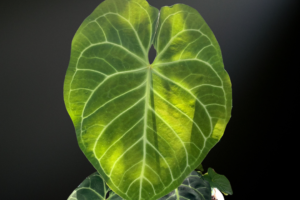
Its singular canopy architecture reflects remarkable ecological efficiency. Rather than maintaining multiple persistent leaves year-round, the plant channels seasonal resources into one elevated photosynthetic structure capable of maximizing filtered rainforest light.
Additionally, the inflorescence participates in specialized carrion-pollination ecology. Floral scent compounds, thermogenic activity, and anthesis timing interact to attract insects associated with decomposition environments. Beyond this ecological role, the flowering process contributes significantly to the species’ collector fascination.
Why Collectors Seek Amorphophallus infundibuliformis
Rarity
Authentic cultivated material remains relatively scarce within international horticulture, particularly among collectors outside specialist aroid circles. Because propagation occurs gradually and flowering requires maturity combined with environmental consistency, established specimens become increasingly valued over time.
Moreover, the species’ unusual floral structure immediately distinguishes it from more familiar Amorphophallus taxa. As a result, Amorphophallus infundibuliformis occupies a highly respected position within curated geophytic collections.
For many collectors, encountering a mature flowering specimen in person remains an exceptionally memorable experience.
Architectural Presence
Despite its moderate scale compared with giant Amorphophallus species, Amorphophallus infundibuliformis projects remarkable visual sophistication through shape and atmosphere alone. The funnel-like bloom introduces strong directional movement, while the elevated canopy contributes elegant structural balance.
In cultivation, the species integrates beautifully into tropical understory displays featuring volcanic stone, moss-covered containers, weathered hardwood, and humid greenhouse environments inspired by monsoonal rainforest ecosystems.
Additionally, the dramatic contrast between dormancy and emergence creates an emotional rhythm rarely found in continuously foliaged tropical plants.
Botanical Interest
From a botanical perspective, Amorphophallus infundibuliformis offers valuable insight into the extraordinary floral diversity within Southeast Asian geophytic aroids. Its spathe architecture, seasonal behavior, and ecological specialization distinguish it clearly from broader or more heavily ornamented relatives.
Unlike species cultivated primarily for size or spectacle, this plant rewards close observation and long-term cultivation. Over time, subtle changes in floral curvature, canopy posture, and tuber maturity gradually reveal increasing complexity.
Ultimately, the species appeals most strongly to collectors drawn toward refinement, rarity, and unusual botanical structure.
Collector’s Perspective
Cultivating Amorphophallus infundibuliformis often becomes a deeply seasonal experience shaped by patience and observation. During dormancy, the tuber rests invisibly beneath the substrate while preserving the energy necessary for future emergence. Then, with remarkable speed, new growth appears once warmth and humidity stabilize.
Meanwhile, flowering introduces one of the most atmospheric moments within tropical aroid cultivation. The funnel-shaped bloom appears sculptural and almost subterranean under humid greenhouse conditions, transforming the growing space completely.
Over time, mature specimens develop stronger seasonal vigor and increasingly dramatic floral architecture. Because of this gradual progression, collectors frequently form strong attachment to individual plants cultivated across many years.
Flowering Characteristics
The inflorescence of Amorphophallus infundibuliformis possesses a uniquely fluid and directional elegance within the genus. The funnel-like spathe creates exceptional depth and shadow, while darker internal surfaces contrast beautifully against subtler exterior tones.
Flowering generally occurs before leaf emergence, allowing the tuber to direct stored resources entirely toward reproductive development. Additionally, thermogenic activity and carrion-associated scent compounds contribute to highly specialized pollination strategies linked to rainforest insects.
Although anthesis remains relatively brief, the bloom carries remarkable atmospheric intensity. Under warm humid conditions, the inflorescence feels less ornamental than elemental — a temporary expression of monsoon forest ecology rendered in living form.
Comparison With Related Species
Compared with broader and more heavily textured Amorphophallus species, Amorphophallus infundibuliformisexpresses a more refined and directional aesthetic. Species such as Amorphophallus titanum dominate through immense scale, whereas Amorphophallus infundibuliformis captivates through contour, movement, and structural subtlety.
In contrast to species with highly ruffled or densely pigmented spathes, this plant emphasizes elegant curvature and spatial tension. Because of this, advanced collectors frequently regard it among the more sophisticated species within curated tropical collections.
Additionally, its manageable size allows integration into specialized greenhouse displays where larger species become impractical over time.
Looking for Rare Amorphophallus Species?
Explore our collection of rare tubers, seeds, and exotic aroids directly from Indonesia. Carefully prepared for international shipping.