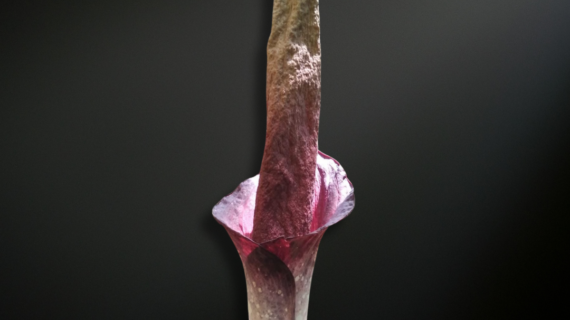
Amorphophallus discophorus — The Disc-Bearing Enigma of Tropical Limestone Forests
Deep within the fragmented tropical forests of Southeast Asia, Amorphophallus discophorus emerges with an almost surreal botanical identity. The species carries the quiet intensity that defines the most captivating members of the genus: a solitary architectural leaf, an underground tuber swollen with seasonal energy, and an inflorescence that appears less botanical than primordial. Unlike more widely cultivated species, Amorphophallus discophorus retains an elusive reputation among serious collectors, partly because of its uncommon appearance and partly because of its restrained presence in cultivation.
Its atmosphere feels ancient. During active growth, the species projects a sculptural elegance shaped by mottled petioles, broad foliar geometry, and the subdued drama typical of forest-floor aroids. Meanwhile, dormancy transforms the plant into silence, leaving only the hidden tuber beneath the substrate as evidence of the next seasonal emergence. Because of this cyclical rhythm, collectors often describe Amorphophallus discophorus not merely as a plant, but as an event within the growing space.
Botanical Significance
Collector Value
Among dedicated aroid collectors, Amorphophallus discophorus occupies a refined niche reserved for species that balance rarity with visual individuality. The plant does not rely on excessive size or flamboyant coloration to command attention. Instead, it captivates through proportion, texture, and unusual floral structure. Its relative scarcity in horticulture further strengthens its desirability, particularly among collectors focused on lesser-known Asian Amorphophallus species.
Moreover, the species appeals strongly to botanical purists who appreciate subtle morphological distinctions. While many ornamental aroids pursue overt tropical exuberance, Amorphophallus discophorus conveys restraint and mystery. As a result, mature specimens often become focal points in curated collections devoted to rare geophytic aroids.
Distinctive Morphology
The species derives much of its identity from the remarkable structure implied by its name. The floral anatomy presents a distinctive disc-like form associated with the reproductive region, lending the species an immediately recognizable silhouette during anthesis. In contrast to heavily ruffled or dramatically elongated relatives, Amorphophallus discophorus expresses a more compact and concentrated visual tension.
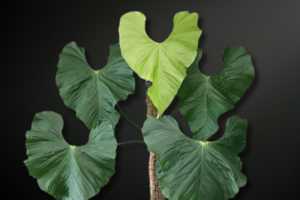
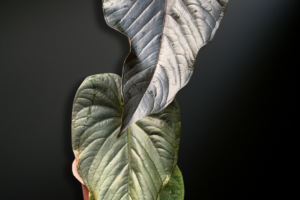
Its petiole typically displays mottled camouflage patterns in muted olive, grey-green, and earthy brown tones. Above this rises a finely divided leaf canopy that creates a suspended, umbrella-like presence above the substrate. Over time, mature tubers develop increasing vigor, producing more substantial foliage and more complex inflorescences.
Additionally, the textural contrast between the smooth petiole surface and the deeply organic floral structures contributes to the species’ cinematic presence. Under humid greenhouse lighting or filtered tropical sun, these details become especially pronounced.
Habitat & Origin
Native Environment
Amorphophallus discophorus originates from tropical regions of Southeast Asia, where it inhabits humid forest ecosystems shaped by seasonal rainfall and warm temperatures throughout the year. In habitat, the species frequently associates with limestone-influenced environments, growing among leaf litter, moss-covered rock, and decomposing organic debris beneath dense canopy cover.
The surrounding atmosphere remains consistently humid, yet airflow through the forest understory prevents stagnation around the root zone. Consequently, the species evolved to exploit brief seasonal windows of moisture and warmth while retreating into dormancy during less favorable periods.
Meanwhile, shifting patterns of filtered sunlight across the forest floor influence the plant’s annual growth cycle. New growth often appears rapidly once environmental conditions stabilize with seasonal rain.
Ecological Adaptations
Like many geophytic aroids, Amorphophallus discophorus survives through an underground tuber that functions both as an energy reservoir and a climatic survival mechanism. This adaptation allows the species to withstand periodic drought, fluctuating moisture levels, and seasonal ecological stress.
Its solitary leaf maximizes photosynthetic efficiency while minimizing structural exposure in the dim understory. Because of this, the plant channels remarkable energy into a single architectural canopy rather than multiple persistent leaves.
Additionally, the inflorescence demonstrates sophisticated pollination strategies typical of the genus. Odor production, thermal activity, and floral timing interact to attract specialized insect pollinators adapted to decompositional forest environments. Although subtle compared with giant species, the flowering process remains one of the most compelling aspects of the plant’s biology.
Why Collectors Seek Amorphophallus discophorus
Rarity
True cultivated material remains uncommon, particularly outside specialized aroid collections. Unlike commercially widespread species, Amorphophallus discophorus circulates primarily through dedicated botanical networks and private collectors.
Because of this limited availability, mature flowering specimens carry significant prestige within serious collections. Even experienced growers may encounter the species only rarely in person.
Moreover, successful long-term cultivation requires patience and environmental consistency, which naturally limits widespread propagation.
Architectural Presence
Although not among the largest species in the genus, Amorphophallus discophorus possesses a refined architectural quality that photographs rarely capture fully. The elegant elevation of the canopy above the substrate creates a floating visual effect, while the mottled petiole introduces almost reptilian texture beneath the foliage.
In cultivation, the plant performs especially well in atmospheric displays featuring dark substrates, volcanic stone, hardwood benches, or tropical understory compositions. Consequently, collectors often integrate the species into highly curated botanical environments rather than conventional ornamental displays.
Botanical Interest
For collectors fascinated by evolutionary diversity within Amorphophallus, this species offers exceptional comparative value. Its floral proportions, growth rhythm, and subtle morphological distinctions provide insight into the extraordinary ecological diversification of Asian aroids.
Unlike more dramatic giant species that dominate through sheer scale, Amorphophallus discophorus rewards close observation. The details emerge gradually: venation, inflorescence structure, tuber development, and shifting seasonal behavior.
Ultimately, the species embodies the quieter side of botanical rarity — one built on nuance rather than spectacle.
Collector’s Perspective
Growing Amorphophallus discophorus often becomes an exercise in attentiveness. The species responds visibly to environmental stability, rewarding careful cultivation with increasingly vigorous seasonal growth. Collectors frequently develop strong attachment to individual specimens because each annual emergence feels temporary and ceremonial.
Meanwhile, dormancy introduces anticipation rather than absence. The dormant tuber carries the promise of transformation beneath the substrate, preserving the cyclical rhythm that defines geophytic aroid cultivation.
For experienced growers, the appeal extends beyond aesthetics alone. The species represents participation in a narrower botanical tradition focused on observation, patience, and ecological understanding. In that sense, Amorphophallus discophorus occupies a space somewhere between living sculpture and rainforest relic.
Flowering Characteristics
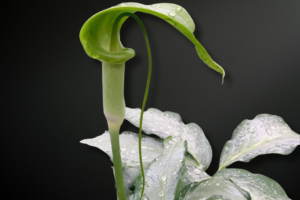
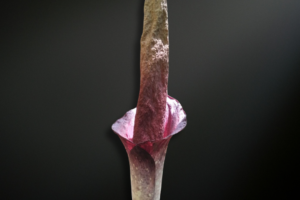
When mature enough to bloom, Amorphophallus discophorus produces an inflorescence that feels strikingly organic and almost subterranean in character. The spathe often displays muted earthy pigmentation that blends with the forest floor palette of its native habitat. In contrast, the internal floral structures introduce greater visual complexity through texture and dimensional form.
Flowering typically occurs before leaf emergence, allowing the plant to dedicate stored tuber energy entirely toward reproduction. Consequently, the bloom carries an intense but short-lived presence that many collectors consider the defining moment of the cultivation cycle.
The scent profile follows the broader ecological strategy of the genus, attracting carrion-associated pollinators through decomposition-like aromatic compounds. Yet despite this biological function, the flowering process remains deeply fascinating from a horticultural perspective.
Comparison With Related Species
Compared with larger and more dramatic species such as Amorphophallus titanum, Amorphophallus discophorusexpresses a quieter sophistication. Its scale feels more intimate, while its morphology emphasizes detail over monumentality.
Unlike species with heavily ornate or aggressively textured spathes, Amorphophallus discophorus presents a more restrained aesthetic rooted in forest camouflage and structural balance. Because of this, many advanced collectors value it precisely for its subtlety.
Additionally, its compact habit allows cultivation in specialized greenhouse collections where larger species become impractical. This balance between rarity, manageability, and botanical intrigue contributes substantially to its enduring appeal among aroid enthusiasts.
Looking for Rare Amorphophallus Species?
Explore our collection of rare tubers, seeds, and exotic aroids directly from Indonesia. Carefully prepared for international shipping.