Amorphophallus prainii — A Shadowed Jewel of the Tropical Understory
Deep within the humid forest systems of Southeast Asia, Amorphophallus prainii emerges with a quiet theatricality that immediately distinguishes it from more familiar members of the genus. Rather than relying on monumental scale or aggressive ornamentation, the species captivates through atmosphere, proportion, and botanical subtlety. Its presence feels deeply tied to the rainforest floor itself — ephemeral, elusive, and strangely architectural against layers of decomposing leaf litter and filtered tropical light.
For seasoned aroid collectors, Amorphophallus prainii represents something increasingly uncommon within modern cultivation: a species whose appeal unfolds gradually over time. Every seasonal emergence carries anticipation. Each new leaf reveals nuanced variation in texture, pigmentation, and posture. Consequently, the species rewards patience and observation rather than spectacle alone. Within curated tropical collections, it occupies a refined space between rarity, ecological intrigue, and understated visual drama.
Botanical Significance
Among Asian Amorphophallus, Amorphophallus prainii holds particular significance because of its distinctive vegetative elegance and comparatively restrained morphology. Unlike giant titan species that dominate through sheer scale, this plant develops a quieter identity rooted in balance, detail, and compositional beauty. Its slender structure and pendulous visual rhythm evoke the atmosphere of mature rainforest interiors where movement, shadow, and humidity shape every aspect of plant architecture.
Moreover, the species contributes important diversity to cultivated Amorphophallus collections. Many enthusiasts initially pursue larger or more flamboyant taxa before gradually developing appreciation for species that express ecological refinement rather than immediate visual force. In this regard, Amorphophallus prainii often becomes a deeply admired collector plant precisely because it resists simplification. Its appeal grows richer with familiarity.
Collector Value
Collectors consistently value Amorphophallus prainii for its scarcity in cultivation and its unusually atmospheric growth habit. The species rarely appears in large-scale horticultural circulation, and mature specimens remain uncommon even among dedicated aroid growers. Because of this, established plants often become centerpiece subjects within specialized collections focused on Asian understory flora and rare tuberous aroids.
Beyond rarity alone, the species possesses an unmistakable collector aura. Its emergence cycle feels dramatic yet restrained, almost ritualistic in character. The slow unfurling of its solitary leaf introduces an evolving display of texture and form that changes subtly as the season progresses. Over time, experienced growers often develop strong attachment to individual specimens, particularly as tubers mature and display increasing stability and refinement.
Distinctive Morphology
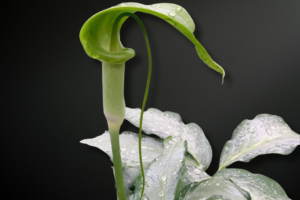
The morphology of Amorphophallus prainii reflects sophisticated adaptation to low-light rainforest environments. Its petiole frequently displays intricate mottling and tonal variation that echoes the fractured visual patterns of damp forest substrates. Meanwhile, the lamina extends outward with remarkable grace, creating a suspended canopy effect that softens the plant’s overall silhouette.
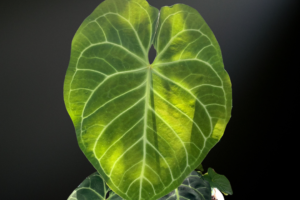
Unlike more rigidly structured species, Amorphophallus prainii conveys movement. The foliage appears almost fluid beneath shifting light conditions, especially in humid environments where the leaf surface maintains a faint reflective sheen. Additionally, the species often develops an elegant spatial balance between vertical lift and lateral spread, giving mature specimens a distinctly composed appearance within enclosed tropical displays.
Habitat & Origin
Amorphophallus prainii originates from humid tropical regions where dense canopy systems regulate light, moisture, and temperature with remarkable consistency. In habitat, the species occupies deeply organic forest floors layered with decomposing vegetation, fragmented wood matter, and mineral-rich humus accumulated over centuries of ecological cycling.
These rainforest systems create highly stable microclimates. Air movement remains gentle, humidity lingers persistently around the understory, and filtered illumination drifts intermittently through overlapping canopy layers. Consequently, the species evolved in conditions defined less by seasonal extremes and more by subtle environmental transitions.
Native Environment
In habitat, Amorphophallus prainii often develops beneath mature tropical vegetation where direct sunlight rarely penetrates for extended periods. The surrounding atmosphere remains dim, humid, and acoustically softened by dense biological activity. Moss-covered roots, decomposing trunks, and saturated soil systems form the visual context from which the species emerges during active growth phases.
Moreover, rainfall patterns strongly influence its annual rhythm. Seasonal moisture availability governs tuber expansion, leaf longevity, and eventual dormancy timing. Rather than enduring harsh climatic fluctuation, the species responds to nuanced ecological signals embedded within rainforest hydrology and temperature stability.
Ecological Adaptations
The elegant structure of Amorphophallus prainii reflects several important ecological adaptations. Its solitary seasonal leaf maximizes light interception while minimizing unnecessary structural mass, an advantageous strategy within deeply shaded forest environments. Additionally, the tuber functions as both an energy reservoir and survival mechanism, allowing the plant to retreat underground during periods of ecological transition.
Because of its understory origin, the species demonstrates strong sensitivity to environmental inconsistency. Excessive exposure, prolonged dryness, or abrupt thermal shifts often disrupt normal developmental rhythm. In contrast, stable humid conditions encourage balanced foliage expansion and stronger seasonal regeneration. These characteristics further reinforce the species’ reputation as a refined and observant collector plant rather than a broadly adaptable ornamental.
Why Collectors Seek Amorphophallus prainii
The enduring fascination surrounding Amorphophallus prainii arises from a combination of rarity, visual restraint, and atmospheric presence. Unlike species pursued primarily for novelty or exaggerated dimensions, this plant attracts collectors who appreciate nuanced botanical identity. Its elegance reveals itself gradually through repeated observation and seasonal familiarity.
For many enthusiasts, the species represents a deeper stage of collecting. Initial attraction may begin with morphology, yet long-term admiration often centers on rhythm, behavior, and ecological character. Consequently, Amorphophallus prainii frequently becomes one of the most personally valued species within mature collections.
Rarity
Even within specialized aroid circles, Amorphophallus prainii remains relatively uncommon. Limited propagation, inconsistent seed availability, and slow tuber maturation all contribute to its scarcity in cultivation. Additionally, the species rarely enters mainstream horticultural channels, which preserves its reputation as a collector-oriented taxon rather than a widely commercialized plant.
Because of this restricted circulation, mature specimens possess strong archival appeal. Collectors often view the species not merely as an ornamental subject but as a living representation of increasingly threatened tropical biodiversity and specialized botanical heritage.
Architectural Presence
Although modest in scale compared to giant Amorphophallus, the species commands attention through proportion and posture. The suspended elegance of the foliage creates strong visual tension against darker backgrounds, particularly in enclosed tropical environments where light falls selectively across the leaf surface.
Meanwhile, the petiole contributes additional visual complexity through intricate patterning and tonal contrast. Mature specimens often resemble carefully composed botanical sculpture rather than conventional foliage plants. As a result, Amorphophallus prainii integrates exceptionally well into curated collections emphasizing atmosphere and composition over sheer abundance.
Botanical Interest
From a botanical perspective, Amorphophallus prainii offers compelling insight into the diversity of adaptive strategies within the genus. Its restrained morphology contrasts dramatically with colossal relatives, illustrating the extraordinary ecological range that Amorphophallus occupies across tropical Asia.
Additionally, the species invites close observation. Subtle developmental changes occur throughout the growth cycle, from early emergence coloration to mature lamina orientation and eventual senescence patterns. For attentive growers, these transitions create an ongoing relationship with the plant that extends far beyond static display value.
Collector’s Perspective
Among experienced collectors, Amorphophallus prainii often inspires a distinctly personal form of appreciation. The species does not overwhelm the viewer immediately. Instead, it cultivates fascination through repetition, atmosphere, and gradual familiarity. Each emergence season introduces anticipation shaped by memory of previous cycles, making the plant feel almost narrative in character.
In cultivation, mature specimens develop a quiet authority within tropical collections. Their presence softens surrounding compositions while simultaneously adding depth and rarity to the broader botanical environment. Moreover, the species rewards those who observe carefully. Minor shifts in humidity, light quality, and seasonal timing reveal themselves directly through posture, texture, and growth rhythm.
Ultimately, Amorphophallus prainii embodies a refined form of botanical collecting rooted not in excess, but in intimacy with ecological detail. Its rarity, elegance, and understated complexity continue to secure its place among the most compelling understory aroids sought by dedicated tropical plant enthusiasts.
Looking for Rare Amorphophallus Species?
Explore our collection of rare tubers, seeds, and exotic aroids directly from Indonesia. Carefully prepared for international shipping.