Amorphophallus titanum — The Legendary Titan Arum
Few plants in the botanical world possess the same cultural gravity, biological scale, and mythic reputation as Amorphophallus titanum. Revered internationally as the Titan Arum, the species has become an icon of tropical botany and one of the most celebrated aroids ever discovered. Rising from the rainforests of western Sumatra with immense structural force and extraordinary flowering proportions, Amorphophallus titanum transcends ordinary horticultural fascination and enters the realm of botanical legend.
The species commands attention not only because of its colossal size, but because of the atmosphere it creates. During active growth, the immense leaf canopy resembles a solitary rainforest tree emerging directly from the forest floor, supported by a towering petiole patterned in complex green and ivory marbling. Meanwhile, the flowering phase transforms the plant into one of the most dramatic reproductive displays in nature. The enormous inflorescence radiates heat, releases a powerful carrion scent, and unfurls with overwhelming visual intensity, creating an event that feels ancient, primal, and profoundly cinematic. Consequently, Amorphophallus titanum remains one of the most desired and prestigious species among elite tropical plant collectors and botanical institutions worldwide.
Botanical Significance
Amorphophallus titanum holds exceptional botanical importance because it produces the world’s largest unbranched inflorescence, an evolutionary achievement that continues to fascinate botanists, ecologists, and collectors alike. The species represents one of the most extreme examples of energy storage and seasonal reproductive investment within the plant kingdom. Its enormous subterranean tuber supports immense biomass production that can surpass the scale of nearly all other understory aroids.
Moreover, the species demonstrates highly specialized pollination ecology shaped by the dense tropical forests of Sumatra. During flowering, the inflorescence generates heat and emits an odor reminiscent of decaying organic matter, attracting carrion-associated insects that function as pollinators. Because of this extraordinary biological strategy, Amorphophallus titanum remains among the most scientifically recognized members of the Araceae family.
Collector Value
Collectors value Amorphophallus titanum not merely for rarity, but for its unparalleled status within tropical horticulture. Cultivating the species successfully requires patience, environmental precision, and long-term commitment, especially when guiding seedlings toward mature flowering size over many years.
Additionally, mature specimens possess extraordinary prestige because flowering events remain infrequent and highly anticipated even within major botanical collections. For advanced aroid enthusiasts, Amorphophallus titanum often represents the ultimate centerpiece species — a living monument to tropical scale, ecological specialization, and botanical history.
Distinctive Morphology
The morphology of Amorphophallus titanum reflects an extraordinary balance between immense scale and refined biological efficiency. The massive petiole rises with tree-like authority, displaying intricate marbling patterns that mimic rainforest bark and mineral textures. Above this structure, the solitary leaf expands into an enormous divided canopy capable of occupying substantial spatial volume while capturing filtered rainforest light with remarkable efficiency.
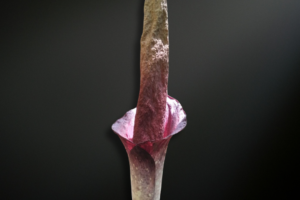
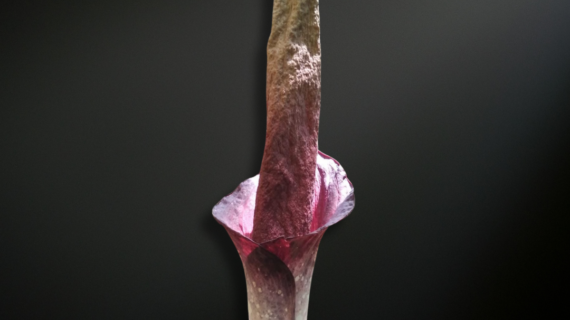
Meanwhile, the inflorescence remains one of the most extraordinary structures in the botanical world. The towering spadix rises dramatically from within the immense pleated spathe, whose interior often displays deep burgundy coloration reminiscent of dark tropical flesh. During anthesis, the combination of scale, heat production, odor emission, and sculptural form creates a flowering event unlike any other cultivated aroid.
Habitat & Origin
Amorphophallus titanum originates from western Sumatra, Indonesia, where it inhabits humid equatorial rainforest ecosystems shaped by volcanic geology, abundant rainfall, and dense canopy cover. These ancient forests support exceptional biodiversity and provide ideal ecological conditions for giant seasonal aroids.
In habitat, the species develops within deep organic substrates enriched by decomposing vegetation, fungal activity, and mineral-rich volcanic sediment. Meanwhile, stable tropical warmth and filtered canopy illumination support substantial seasonal canopy production and long-term tuber development.
Native Environment
Within its natural range, Amorphophallus titanum frequently occurs in deeply shaded rainforest interiors where towering canopy trees regulate temperature, humidity, and illumination across the forest floor. The surrounding atmosphere remains warm, humid, and saturated with decomposing organic material characteristic of mature equatorial ecosystems.
Additionally, Sumatra’s volcanic landscapes contribute significantly to the fertility of the species’ habitat. Constant biological decomposition combined with mineral-rich soils creates highly productive yet aerated substrates capable of supporting immense subterranean tubers over decades of seasonal growth cycles.
Ecological Adaptations
The enormous tuber of Amorphophallus titanum functions as a massive subterranean energy reservoir that supports rapid canopy emergence and highly demanding flowering events. During active growth, the species accumulates extraordinary biomass before retreating underground during dormancy as environmental rhythms shift subtly throughout the year.
Meanwhile, the immense leaf architecture evolved to maximize light interception within dim rainforest understories where competition for filtered illumination remains intense. The towering petiole elevates the canopy above surrounding understory vegetation while improving access to airflow and diffuse tropical light gradients. Because of these adaptations, Amorphophallus titanum represents one of the most advanced expressions of rainforest gigantism among tropical understory plants.
Why Collectors Seek Amorphophallus titanum
Collectors pursue Amorphophallus titanum because few plants combine such overwhelming scale, scientific importance, and cultural recognition within a single species. The plant introduces a level of botanical drama rarely achieved in cultivation, evoking the immense ecological power of untouched Sumatran rainforest systems.
For experienced enthusiasts, the species also symbolizes dedication and long-term achievement. Successfully cultivating a mature Titan Arum demands years of environmental management, seasonal observation, and patient tuber development. Consequently, established specimens often become defining highlights within elite aroid collections and botanical conservatories.
Rarity
Although internationally famous, Amorphophallus titanum remains relatively uncommon in private cultivation, particularly as mature flowering specimens. The species’ enormous spatial requirements, long developmental timeline, and specialized environmental needs significantly limit widespread cultivation success.
Because of this rarity, mature tubers and flowering plants frequently acquire extraordinary collector significance. Among giant aroids, Amorphophallus titanum occupies a legendary position rarely equaled by any other tropical species.
Architectural Presence
Few tropical plants rival the architectural dominance of mature Amorphophallus titanum. The immense canopy creates dramatic rainforest shadow while transforming surrounding space through scale, height, and structural density. Meanwhile, the colossal flowering structure introduces a level of sculptural intensity that feels almost prehistoric in character.
Rather than appearing merely ornamental, the species resembles a living relic from an ancient tropical world shaped by biological excess and ecological competition. This extraordinary presence contributes greatly to its enduring fascination across both botanical science and collector culture.
Botanical Interest
From a botanical perspective, Amorphophallus titanum offers unparalleled insight into tropical reproductive ecology, biomass accumulation, and evolutionary specialization within the Araceae. Its heat-generating inflorescence, carrion pollination strategy, and immense subterranean storage system distinguish it sharply from nearly all other flowering plants.
Additionally, the species serves as an important representative of Sumatra’s increasingly threatened rainforest biodiversity. For collectors, botanists, and conservationists alike, Amorphophallus titanum embodies both the grandeur and fragility of one of Earth’s richest tropical ecosystems.
Flowering Characteristics
The flowering cycle of Amorphophallus titanum remains among the most extraordinary events in botany. Mature tubers may require many years of energy accumulation before producing an inflorescence rather than foliage. When flowering finally occurs, the spathe gradually unfurls around the towering spadix, revealing immense sculptural form and deep internal coloration.
Meanwhile, thermogenesis elevates the temperature of the inflorescence while the species releases its characteristic carrion odor to attract pollinating insects. The bloom lasts only a brief period before collapsing, intensifying the sense of rarity and anticipation surrounding each flowering event. Consequently, flowering Titan Arums often attract international botanical attention and public fascination.
Collector’s Perspective
Among experienced aroid enthusiasts, Amorphophallus titanum often becomes admired not only as a plant, but as a long-term botanical pursuit. Each seasonal emergence introduces anticipation shaped by years of gradual tuber development and careful environmental management.
In cultivation, mature specimens gradually produce increasingly immense foliage with stronger architectural rhythm and greater spatial presence over successive cycles. Flowering remains a rare and deeply memorable milestone that transforms the species from impressive giant to true botanical phenomenon.
Ultimately, Amorphophallus titanum embodies the colossal biological intensity of the Sumatran rainforest itself. Its enduring appeal emerges through scale, rarity, scientific fascination, and its extraordinary ability to evoke the ancient ecological grandeur of Earth’s equatorial forests.
Looking for Rare Amorphophallus Species?
Explore our collection of rare tubers, seeds, and exotic aroids directly from Indonesia. Carefully prepared for international shipping.