Arisaema barbatum — The Bearded Cobra Lily of Himalayan Forest Shadows
Among the more mysterious and theatrically structured woodland aroids of Asia, Arisaema barbatum emerges from the forest floor with a presence that feels ancient, shadowed, and almost ritualistic. The species carries the unmistakable tension characteristic of cobra lilies, yet it distinguishes itself through an extraordinary “bearded” spadix appendage that transforms the inflorescence into something deeply sculptural and nearly surreal beneath humid mountain canopy.
Unlike broader ornamental woodland species that rely primarily on color, Arisaema barbatum captivates through posture, texture, and atmosphere. The elongated spathe curves protectively around the floral chamber while the filamentous appendage descends with wild irregularity, evoking moss, roots, or drifting forest fibers suspended in mist-filled air.
For collectors, the species represents one of the more evocative examples of Himalayan woodland adaptation within the genus. Every seasonal emergence feels ceremonial, shaped by cold dormancy, mountain rainfall, and the slow rhythms of temperate forest ecosystems.
Botanical Significance
Collector Value
Within specialist Arisaema collections, Arisaema barbatum holds exceptional fascination due to its unusual inflorescence structure and relatively uncommon cultivated status. Mature flowering specimens display an almost mythical visual quality that separates the species from more familiar cobra lilies.
Moreover, the dramatic filamentous appendage creates substantial collector interest among enthusiasts drawn toward bizarre floral morphology and rare Asian woodland aroids. Consequently, established specimens with reliable flowering cycles become increasingly prized over time.
For collectors, the appeal extends far beyond rarity alone. The species embodies a distinctly wild botanical elegance rooted in seasonality, mountain ecology, and structural refinement.
Distinctive Morphology
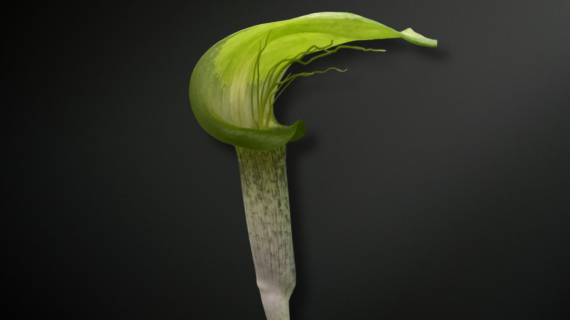
The defining feature of Arisaema barbatum lies in its elongated spadix appendage adorned with thread-like beard-like structures that extend downward from the floral opening. This remarkable morphology gives the species its name and creates a haunting visual silhouette within shaded environments.
Meanwhile, the spathe frequently develops deep green, olive, chocolate, or muted purple tones accented by subtle striping and layered textural variation. The floral chamber narrows elegantly toward the upper hood, enhancing the cobra-like appearance characteristic of the genus.
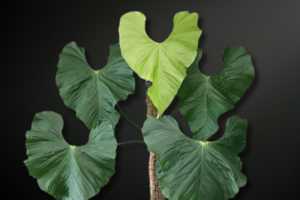
Above the inflorescence, divided foliage emerges on elongated petioles with remarkable woodland grace. Unlike tropical foliage aroids that emphasize permanence, Arisaema barbatum communicates beauty through fleeting seasonal transformation.
Habitat & Origin
Native Environment
Arisaema barbatum originates from cool humid forests of the eastern Himalayas and surrounding mountainous regions where dense canopy systems, seasonal rainfall, and decomposing woodland debris create highly specialized understory environments.
In habitat, the species develops among moss-covered stone, leaf litter, fern colonies, and shaded forest slopes enriched by organic material accumulated over decades. Filtered mountain light reaches the understory softly through layered canopy cover while cool airflow stabilizes environmental moisture.
Consequently, the species evolved within ecosystems defined by seasonal transition, atmospheric humidity, and strong ecological rhythm.
Ecological Adaptations
Like many temperate woodland aroids, Arisaema barbatum survives through an underground tuber that stores energy during dormancy. This adaptation allows the species to retreat entirely beneath the forest floor during unfavorable seasonal conditions before re-emerging with the arrival of spring warmth and moisture.
The elongated filamentous appendage likely contributes to specialized pollination strategies by increasing scent dispersal and guiding insect movement within dense woodland understory environments. Additionally, the hooded spathe structure protects reproductive organs from excessive rainfall and fluctuating mountain conditions.
Because of these adaptations, the species maintains remarkable resilience despite its visually delicate appearance.
Why Collectors Seek Arisaema barbatum
Rarity
Authentic cultivated material of Arisaema barbatum remains relatively scarce outside specialist alpine and woodland plant collections. Because flowering-size tubers require years of stable seasonal development, mature specimens become increasingly valuable among serious collectors.
Moreover, the species’ highly unusual beard-like appendage creates immediate fascination even among experienced aroid enthusiasts. As a result, Arisaema barbatum occupies a uniquely atmospheric position within temperate geophyte collections.
For many growers, witnessing a mature specimen flower successfully represents a deeply rewarding milestone achieved through patience and ecological understanding.
Architectural Presence
Although comparatively restrained in size, Arisaema barbatum creates extraordinary visual tension through line, shadow, and movement. The descending filamentous appendage introduces an almost animated quality beneath woodland lighting conditions.
In cultivation, the species pairs beautifully with moss-covered stone, weathered ceramic vessels, woodland ferns, and shaded alpine displays designed to evoke cool Himalayan forest atmospheres.
Beyond this, the plant’s seasonal disappearance and re-emergence create emotional depth rarely encountered among evergreen ornamental species.
Botanical Interest
From a botanical perspective, Arisaema barbatum offers exceptional insight into the extraordinary floral diversity of Asian woodland aroids. Its filamentous appendage, hooded spathe architecture, and cool-climate adaptation distinguish it sharply from more conventional geophytic ornamentals.
Unlike species cultivated primarily for bright floral coloration, this plant rewards close observation and ecological sensitivity. Over time, subtle changes in floral proportion, appendage structure, and tuber maturity reveal increasing sophistication.
Ultimately, the species appeals most strongly to collectors drawn toward atmospheric woodland cultivation and rare morphological adaptation.
Collector’s Perspective
Cultivating Arisaema barbatum often becomes an exercise in seasonal rhythm and environmental nuance. During dormancy, the tuber rests silently beneath cool substrate layers while preserving the reserves necessary for future emergence. Then, as spring moisture and warming soil awaken the forest floor, the first growth points rise gradually through moss and leaf litter.
Meanwhile, flowering introduces one of the most visually compelling moments within woodland plant cultivation. The hooded spathe opens slowly while the filamentous appendage extends downward with ghostlike movement beneath diffused light.
Over time, mature specimens develop stronger flowering consistency and increasingly refined floral architecture. Because of this progression, collectors frequently maintain individual plants for decades as treasured woodland rarities.
Flowering Characteristics
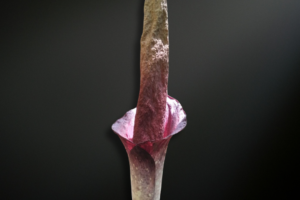
The inflorescence of Arisaema barbatum ranks among the most structurally unusual within the genus. The elongated hooded spathe encloses the floral chamber while the beard-like appendage descends dramatically from the opening, creating an unmistakable silhouette.
Flowering generally occurs during spring or early summer alongside active foliage development. Additionally, subtle scent production and specialized floral architecture support woodland pollination strategies adapted to humid mountain ecosystems.
Although the bloom remains seasonally brief, its sculptural presence leaves lasting impression among collectors fortunate enough to observe mature flowering specimens.
Comparison With Related Species
Compared with Arisaema consanguineum, which emphasizes radiating foliage symmetry and elongated appendages, Arisaema barbatum develops a more texturally complex and visually untamed floral structure. The filamentous beard-like extension immediately separates it from more streamlined relatives.
In contrast to heavily striped species such as Arisaema griffithii, this plant relies more heavily on silhouette, texture, and appendage movement than bold coloration. Because of this, advanced collectors frequently regard Arisaema barbatum among the most atmospheric and intellectually intriguing species within the genus.
Additionally, its Himalayan woodland lineage contributes substantial ecological and botanical significance.
Looking for Rare Amorphophallus Species?
Explore our collection of rare tubers, seeds, and exotic aroids directly from Indonesia. Carefully prepared for international shipping.