Anthurium balaoanum — The Velvety Sentinel of Ecuadorian Rainforests
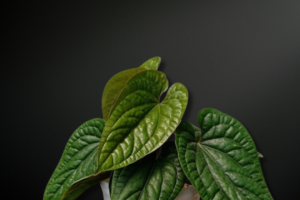
Among the more elusive velvet-leaf anthuriums of tropical South America, Anthurium balaoanum carries an atmosphere of deep rainforest stillness shaped by humidity, shadow, and immense foliage texture. The species possesses a distinctly primordial elegance, combining elongated velvet blades with softly illuminated venation and a structural presence that feels ancient rather than ornamental.
Unlike highly polished hybrid anthuriums cultivated for exaggerated symmetry, Anthurium balaoanum retains the visual language of wild cloudforest ecology. Mature leaves emerge with quiet authority, suspended on elongated petioles beneath filtered canopy light where moisture softens every contour and shadow deepens across the velvet surface.
For collectors, the species represents a rare convergence of botanical refinement and ecological authenticity. Its beauty unfolds gradually through maturity, environmental stability, and the slow accumulation of increasingly monumental foliage.
Botanical Significance
Collector Value
Within advanced aroid collections, Anthurium balaoanum remains highly prized for its elongated velvet foliage and comparatively uncommon cultivated status. Mature specimens develop a remarkably immersive rainforest presence that distinguishes the species from more widely distributed velvet anthuriums.
Moreover, the plant rewards long-term cultivation with increasingly dramatic foliage proportions and stronger textural depth. Consequently, established specimens with mature leaf size and stable growth history become especially admired among collectors focused on rare South American foliage aroids.
For collectors, the species offers a deeply atmospheric growing experience centered on patience, observation, and environmental refinement.
Distinctive Morphology
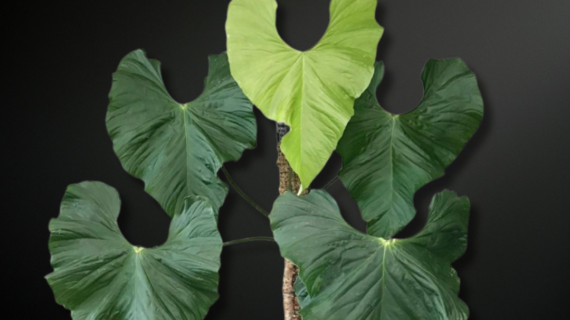
The defining feature of Anthurium balaoanum lies in its elongated velvety foliage marked by subtle yet elegant venation and softly tapered proportions. Mature leaves frequently develop a graceful pendant posture that amplifies the species’ cloudforest character.
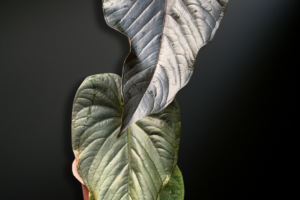
Meanwhile, the velvet surface absorbs surrounding light with remarkable depth, creating tonal variation that shifts continuously beneath humid greenhouse conditions. Emerging foliage may display bronze, olive, or muted burgundy undertones before gradually deepening into darker mature coloration.
Unlike species that rely on highly contrasting silver venation for visual impact, Anthurium balaoanum communicates sophistication through texture, atmosphere, and elongated rainforest structure.
Habitat & Origin
Native Environment
Anthurium balaoanum originates from humid tropical forests of Ecuador where cloud-laden canopy systems maintain constant atmospheric moisture, stable warmth, and subdued understory illumination throughout the year.
In habitat, the species develops terrestrially and occasionally epiphytically among moss-covered trunks, decomposing organic debris, and heavily shaded forest slopes enriched by continuous rainfall and airflow.
Consequently, the species evolved foliage adapted to saturated tropical environments where humidity remains persistently elevated and direct sunlight rarely penetrates the dense canopy.
Ecological Adaptations
Unlike seasonal geophytic aroids that retreat into dormancy, Anthurium balaoanum maintains continuous vegetative growth under stable rainforest conditions. Its root system anchors itself within airy organic substrate while absorbing moisture from both soil and atmosphere.
The elongated foliage structure may assist with rainfall runoff and airflow regulation beneath cloudforest canopy conditions. Additionally, the velvet leaf surface enhances light absorption within low-light understory environments while contributing to the species’ extraordinary visual depth.
Because of these adaptations, mature specimens develop an immersive rainforest presence that feels inseparable from humid tropical ecosystems.
Why Collectors Seek Anthurium balaoanum
Rarity
Authentic cultivated specimens of Anthurium balaoanum remain relatively uncommon outside specialized aroid collections. Because propagation progresses gradually and mature foliage requires years of stable cultivation to fully develop, established specimens retain strong collector prestige.
Moreover, the species occupies a distinct aesthetic position within velvet anthuriums. Rather than emphasizing excessive ornamentation, it offers refined ecological elegance rooted in texture, proportion, and atmosphere.
For many enthusiasts, cultivating the plant to maturity becomes a long-term botanical pursuit centered on foliage evolution and rainforest authenticity.
Architectural Presence
Few velvet anthuriums create the same combination of softness and authority as Anthurium balaoanum. The elongated foliage drapes and expands through space with remarkable calmness, transforming greenhouse environments into layered tropical compositions rich with humidity and shadow.
In cultivation, the species pairs beautifully with moss-covered staging, volcanic stone, aged hardwood structures, and subdued lighting environments designed to evoke Ecuadorian cloudforest ecosystems.
Beyond this, the gradual unfurling of each new leaf introduces a slow ceremonial rhythm deeply appreciated among serious collectors.
Botanical Interest
From a botanical perspective, Anthurium balaoanum offers exceptional insight into cloudforest foliage adaptation within South American aroids. Its elongated velvet leaves, subdued venation, and atmospheric growth habit distinguish it sharply from more rigid or highly reflective relatives.
Unlike species cultivated primarily for dramatic contrast, this plant rewards subtle observation and environmental sensitivity. Over time, shifting foliage posture, increasing blade length, and evolving surface texture reveal remarkable sophistication.
Ultimately, the species appeals most strongly to collectors drawn toward rainforest realism, velvet foliage, and immersive tropical atmosphere.
Collector’s Perspective
Cultivating Anthurium balaoanum often becomes an exercise in recreating cloudforest stability. Elevated humidity, warm airflow, subdued lighting, and breathable substrate all contribute directly to foliage quality and long-term structural refinement.
Meanwhile, each new leaf introduces anticipation shaped by scale, texture, and gradual maturation. Juvenile plants remain comparatively restrained; however, mature specimens develop extraordinary foliage depth and increasingly elongated proportions over time.
As years pass, established plants acquire remarkable spatial presence without sacrificing their quiet elegance. Because of this transformation, collectors frequently maintain individual specimens for decades as evolving tropical centerpieces.
Foliage Characteristics
The foliage of Anthurium balaoanum ranks among the more atmospheric within cultivated velvet anthuriums. Elongated blades combine velvety texture with softly defined venation and naturally pendant structure that intensifies substantially with maturity.
New leaves frequently emerge in bronze or muted olive tones before gradually deepening into darker mature coloration. Meanwhile, humid greenhouse lighting continuously alters the reflective quality of the velvet surface, creating layered visual depth throughout the day.
Under ideal cultivation conditions, mature foliage develops exceptional size and rainforest movement capable of transforming surrounding tropical displays entirely.
Comparison With Related Species
Compared with Anthurium warocqueanum, Anthurium balaoanum develops somewhat broader and softer foliage with less dramatically elongated proportions. While warocqueanum emphasizes regal pendulous structure, balaoanum expresses a gentler and more cloudforest-oriented elegance.
In contrast to Anthurium regale or Anthurium crystallinum, which rely heavily on bright venation contrast, this species communicates sophistication through tonal depth and velvety atmosphere. Because of this, advanced collectors frequently regard Anthurium balaoanum among the more ecologically expressive velvet-leaf anthuriums in cultivation.
Additionally, its Ecuadorian cloud forest lineage contributes exceptional botanical significance within rare tropical collections.
Looking for Rare Amorphophallus Species?
Explore our collection of rare tubers, seeds, and exotic aroids directly from Indonesia. Carefully prepared for international shipping.