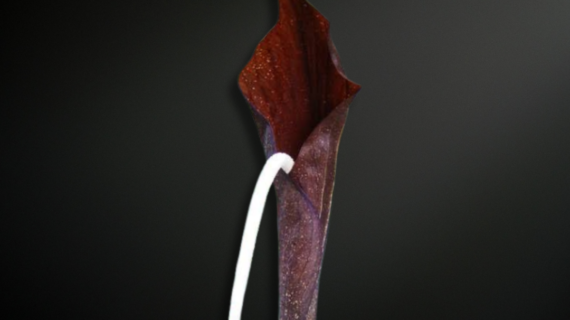
Amorphophallus pendulus — The Elusive Pendulous Aroid of Northern Indochina
Within the vast and often theatrical world of Amorphophallus, few species command quiet fascination quite like Amorphophallus pendulus. Unlike the monumental grandeur of its larger relatives, this exceptionally rare species captivates collectors through elegance, restraint, and unusual form. Its pendulous inflorescence creates a distinctly atmospheric presence, one that feels less architectural and more organic, as though suspended within the dim understory of an untouched tropical forest.
Amorphophallus pendulus occupies a remarkably narrow space in cultivation. Consequently, advanced aroid collectors continue to regard the species as both elusive and deeply desirable. While many Amorphophallus species attract attention through sheer scale, A. pendulus achieves distinction through silhouette, rarity, and refined botanical character. The species reveals itself gradually, rewarding patient observation rather than spectacle alone.
Botanical Significance
Amorphophallus pendulus represents a compelling expression of evolutionary specialization within the Araceae family. Its structure diverges from the more upright floral presentation commonly associated with the genus, introducing a distinctly pendant habit that immediately separates it from surrounding species.
Moreover, the plant embodies the atmospheric qualities collectors often seek in truly uncommon tropical aroids. Every stage of development, from dormancy to leaf emergence and eventual flowering, carries an almost archival sense of rarity. Because of this, the species holds considerable significance within specialist collections focused on obscure Southeast Asian flora.
Collector Value
Among experienced collectors, rarity alone rarely defines desirability. Instead, true botanical prestige emerges through a combination of scarcity, cultivation difficulty, aesthetic individuality, and historical obscurity. Amorphophallus pendulus fulfills all four qualities with remarkable consistency.
The species appears infrequently in cultivation, and even long-established aroid collections often lack verified specimens. As a result, collectors view mature flowering individuals as notable achievements rather than ordinary acquisitions. Additionally, the species appeals strongly to enthusiasts who favor unusual morphology over dramatic size.
For collectors who appreciate nuanced botanical expression, A. pendulus offers something increasingly uncommon in modern horticulture: mystery. Its limited visibility within the commercial market preserves a sense of exclusivity that many heavily circulated species have gradually lost over time.
Distinctive Morphology
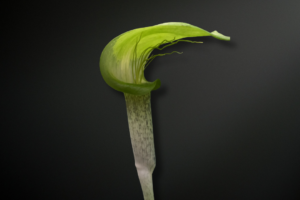
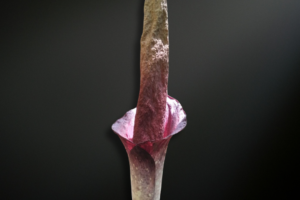
The defining characteristic of Amorphophallus pendulus lies within its remarkable pendulous inflorescence. Rather than presenting itself vertically, the flowering structure arches and descends with unusual fluidity, creating a silhouette rarely encountered within the genus.
This suspended floral posture produces a striking visual contrast against the forest floor environment from which the species originates. Meanwhile, the inflorescence itself carries the subdued sophistication often associated with highly specialized tropical aroids. Texture, proportion, and posture combine to create an appearance that feels simultaneously delicate and prehistoric.
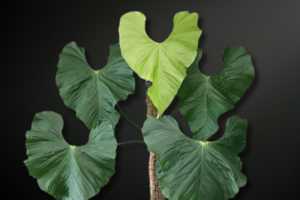
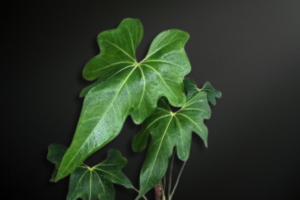
Beyond this, the solitary leaf structure contributes further elegance during active growth. The canopy often displays finely divided architecture with an almost sculptural quality, reinforcing the species’ refined visual identity.
Habitat & Origin
Amorphophallus pendulus originates from the tropical forests of northern Thailand and neighboring regions of Laos, where seasonal humidity, limestone geology, and dense understory conditions shape its ecological behavior. These forests support an extraordinary concentration of endemic aroids, many of which remain poorly represented in cultivation.
Unlike species adapted to open tropical conditions, A. pendulus inhabits shaded woodland ecosystems where filtered light and atmospheric moisture dominate the environment. Consequently, the species developed a growth rhythm deeply connected to seasonal rainfall and forest humidity cycles.
Native Environment
In habitat, Amorphophallus pendulus emerges from rich organic substrates layered beneath mature tropical canopy systems. Moss-covered limestone, decomposing leaf litter, and humid air define much of its ecological atmosphere.
The surrounding forests often feel ancient and still. Ferns, climbing vines, and scattered aroids occupy the dim understory, while intermittent shafts of light illuminate sections of the forest floor. Within these environments, A. pendulus blends almost invisibly into its surroundings until flowering season reveals its unusual suspended inflorescence.
Moreover, the species appears adapted to environments that remain relatively undisturbed. Because of this, habitat degradation presents a growing concern for long-term wild populations.
Ecological Adaptations
Amorphophallus pendulus demonstrates several characteristics associated with highly specialized tropical geophytes. The subterranean tuber functions as both an energy reserve and survival mechanism during dormant periods, allowing the plant to endure seasonal fluctuations within monsoonal ecosystems.
Meanwhile, the pendulous inflorescence likely reflects ecological interactions unique to its native environment, potentially involving specialized pollinator behavior within dense understory habitats. Although research remains limited, the structure itself suggests evolutionary divergence shaped by highly localized environmental pressures.
Over time, these adaptations produced a species that feels remarkably distinct even among other rare Amorphophallus taxa.
Why Collectors Seek Amorphophallus pendulus
Rarity
Few species within the genus maintain the same degree of scarcity in cultivation as Amorphophallus pendulus. Even among specialist growers, verified flowering specimens remain uncommon.
Unlike commercially widespread aroids, this species still circulates primarily through dedicated collectors, botanical exchanges, and specialized rare plant networks. Consequently, acquiring healthy material often requires patience, long-term relationships, and substantial botanical knowledge.
For collectors, this rarity enhances not only prestige but also emotional connection. Ownership feels less transactional and more archival.
Architectural Presence
Despite its relatively restrained scale compared to giant Amorphophallus species, A. pendulus possesses remarkable visual authority. The drooping inflorescence introduces movement and asymmetry rarely observed within tropical geophytes.
In cultivation, the species creates a distinctly cinematic atmosphere when approaching anthesis. Shadows, curvature, and suspended floral form combine to produce an almost theatrical effect beneath greenhouse lighting or shaded conservatory conditions.
Unlike aggressively ornamental species, A. pendulus rewards quiet observation. Its beauty unfolds through posture, proportion, and rarity rather than overt flamboyance.
Botanical Interest
Beyond aesthetics, Amorphophallus pendulus attracts significant interest from aroid specialists because of its uncommon structural characteristics and limited representation within botanical literature.
Collectors focused on genus diversity frequently regard the species as essential for comprehensive Amorphophallus collections. Meanwhile, researchers and taxonomic enthusiasts continue to value the plant for its distinctive floral architecture and ecological specialization.
Because of this, the species occupies a unique intersection between horticultural rarity and botanical significance.
Collector’s Perspective
Among advanced aroid enthusiasts, certain plants evolve into legends through scarcity, reputation, and visual intrigue. Amorphophallus pendulus belongs firmly within that category.
Collectors often describe the species less as a display specimen and more as an experience. Its emergence from dormancy carries anticipation, while flowering events create moments of genuine botanical theatre. The pendulous inflorescence transforms ordinary greenhouse space into something atmospheric and almost primordial.
Moreover, the species appeals strongly to collectors who favor depth over spectacle. While towering Amorphophallus species command public attention, A. pendulus resonates more intimately with dedicated enthusiasts who recognize subtlety, rarity, and refined morphological distinction.
Ultimately, Amorphophallus pendulus represents the essence of high-end botanical collecting: a plant defined not merely by appearance, but by atmosphere, obscurity, and enduring fascination.
Conservation Importance
Because Amorphophallus pendulus occupies a relatively narrow native range, habitat disturbance poses meaningful long-term risks to wild populations. Expanding agricultural activity, forest fragmentation, and ecological disruption continue to affect many specialized tropical species throughout Southeast Asia.
Consequently, responsible cultivation within private and botanical collections carries increasing importance. Preservation through propagation allows rare taxa like A. pendulus to survive beyond vulnerable habitat boundaries while simultaneously expanding scientific and horticultural understanding.
For collectors, cultivating such species increasingly reflects stewardship as much as personal fascination.
Comparison With Related Species
Within the genus, Amorphophallus pendulus contrasts sharply with visually dominant species such as Amorphophallus titanum or Amorphophallus gigas. Those species emphasize scale and dramatic vertical mass. In contrast, A. pendulus expresses elegance through suspension, curvature, and understated complexity.
Meanwhile, some smaller Southeast Asian species share ecological similarities with A. pendulus, yet few display the same uniquely drooping floral structure. This singular characteristic continues to define its identity among experienced collectors.
As a result, the species maintains an unmistakable presence within specialist Amorphophallus collections despite its relative obscurity.
Meta Description: Discover Amorphophallus pendulus, an exceptionally rare Southeast Asian aroid admired for its pendulous inflorescence, elusive presence in cultivation, and refined botanical significance among advanced tropical plant collectors.
Looking for Rare Amorphophallus Species?
Explore our collection of rare tubers, seeds, and exotic aroids directly from Indonesia. Carefully prepared for international shipping.