Amorphophallus haematospadix — The Blood-Spadix Enigma of Tropical Asia
Few species within the genus evoke such immediate intrigue as Amorphophallus haematospadix. Darkly atmospheric and visually arresting, the species derives much of its mystique from the dramatic coloration of its spadix — a deep blood-toned structure that rises from the forest floor with almost ritualistic intensity. Beneath humid tropical canopy, the bloom appears less floral than elemental, emerging briefly from shadow before retreating once again into dormancy.
Unlike larger species celebrated primarily for scale, Amorphophallus haematospadix captivates through concentrated drama and refined botanical tension. The species combines sculptural floral architecture, richly mottled foliage, and distinctly seasonal behavior into a growth cycle that feels deeply tied to rainforest decomposition ecology.
In habitat, the plant inhabits warm understory environments saturated with humidity, decomposing organic matter, and filtered tropical light. Meanwhile, in cultivation, mature specimens develop an unmistakable presence that advanced collectors often describe as haunting, theatrical, and profoundly atmospheric.
For serious aroid enthusiasts, Amorphophallus haematospadix represents one of the more emotionally compelling species within the genus — a plant defined not only by rarity, but by mood, contrast, and ecological authenticity.
Botanical Significance
Collector Value
Within specialist collections, Amorphophallus haematospadix remains highly admired for its distinctive floral pigmentation and unusual visual intensity. The species appeals particularly to collectors drawn toward darker-toned tropical aroids and species with dramatic inflorescence structure.
Moreover, authentic cultivated material remains relatively uncommon outside dedicated aroid circles. Consequently, mature flowering specimens hold substantial prestige among collectors focused on obscure Southeast Asian geophytes and rare Amorphophallus taxa.
For collectors, the species offers a remarkably immersive seasonal experience. Each emergence introduces subtle variation in foliage architecture, petiole patterning, and floral expression, gradually revealing increasing complexity over time.
Distinctive Morphology
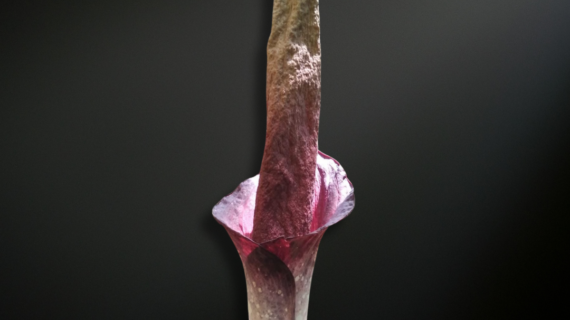
The defining feature of Amorphophallus haematospadix lies in its striking blood-colored spadix, which creates extraordinary tonal contrast against the surrounding floral chamber. Under humid tropical conditions, the inflorescence appears dense with shadow and depth, almost absorbing surrounding light.
Meanwhile, the spathe often displays muted exterior tones contrasted by darker internal pigmentation that intensifies the dramatic visual atmosphere during anthesis. The petiole commonly carries intricate camouflage patterning in olive, bronze, ash-grey, and deep green shades that blend naturally with rainforest debris.
Above this rises a finely divided canopy suspended elegantly above the forest floor. Unlike species that rely primarily on monumental scale, Amorphophallus haematospadix communicates sophistication through concentrated visual tension and sculptural restraint.
Habitat & Origin
Native Environment
Amorphophallus haematospadix originates from humid tropical forests of Southeast Asia, where dense canopy systems maintain warm temperatures, elevated atmospheric moisture, and subdued understory illumination throughout much of the year.
In habitat, the species develops among decomposing leaf litter, moss-covered stone, porous mineral-rich soils, and organically enriched rainforest debris. Filtered light drifts softly across the understory while seasonal rainfall patterns shape the plant’s annual growth rhythm.
Consequently, the species evolved to maximize rapid seasonal growth during humid periods while retreating completely below ground during dormancy.
Ecological Adaptations
Like many geophytic aroids, Amorphophallus haematospadix survives through a subterranean tuber capable of storing nutrients and moisture between active growth cycles. This adaptation allows the species to endure temporary environmental instability while preserving energy for future emergence and flowering.
Its solitary canopy architecture reflects remarkable ecological efficiency. Rather than producing multiple persistent leaves year-round, the species channels stored resources into one elevated photosynthetic structure optimized for shaded rainforest environments.
Additionally, the inflorescence demonstrates highly specialized carrion-pollination ecology. Thermogenesis, scent production, and floral timing combine to attract rainforest insects associated with decomposition environments. Beyond this biological function, flowering contributes greatly to the species’ legendary collector appeal.
Why Collectors Seek Amorphophallus haematospadix
Rarity
Authentic cultivated specimens remain uncommon outside specialist tropical collections and advanced aroid networks. Because propagation progresses relatively slowly and mature flowering requires environmental consistency over multiple seasons, established specimens become increasingly desirable with age.
Moreover, the species’ intensely pigmented floral structure immediately separates it from more familiar Amorphophallus species. As a result, Amorphophallus haematospadix occupies a uniquely atmospheric position within curated geophytic collections.
For many enthusiasts, witnessing a mature bloom in person becomes an unforgettable botanical experience.
Architectural Presence
Despite its more moderate size compared with giant Amorphophallus species, Amorphophallus haematospadix projects remarkable spatial intensity through color, shadow, and floral geometry. The blood-toned spadix creates a focal point that feels simultaneously elegant and primal.
In cultivation, the species integrates beautifully into rainforest-inspired displays featuring volcanic stone, aged ceramic vessels, moss-lined staging, and subdued greenhouse lighting. Beyond this, the dramatic shift between dormancy and emergence adds emotional rhythm rarely found in continuously foliaged tropical plants.
Collectors frequently describe the species as cinematic rather than ornamental.
Botanical Interest
From a botanical perspective, Amorphophallus haematospadix offers exceptional insight into the diversity of floral pigmentation and pollination ecology within Southeast Asian geophytic aroids. Its coloration, scent ecology, and structural refinement distinguish it clearly from broader or more brightly ornamented relatives.
Unlike species cultivated primarily for scale, this plant rewards close observation and environmental understanding. Over time, subtle shifts in floral depth, canopy structure, and tuber maturity gradually reveal increasing sophistication.
Ultimately, the species appeals most strongly to collectors drawn toward atmosphere, rarity, and biologically expressive tropical forms.
Collector’s Perspective
Cultivating Amorphophallus haematospadix often becomes an exercise in anticipation and restraint. During dormancy, the tuber rests invisibly beneath the substrate while storing the energy necessary for future emergence. Then, once warmth and humidity stabilize, vigorous new growth appears with remarkable speed and confidence.
Meanwhile, flowering transforms the surrounding environment completely. The dark bloom introduces a mood rarely encountered within tropical plant cultivation — humid, shadowed, and almost subterranean in atmosphere.
Over time, mature specimens develop stronger seasonal vigor and increasingly dramatic floral presentation. Because of this gradual evolution, collectors frequently develop unusually strong attachment to individual plants cultivated across many years.
Flowering Characteristics
The inflorescence of Amorphophallus haematospadix ranks among the most visually dramatic within the genus. The blood-colored spadix rises prominently from the floral chamber, creating extraordinary tonal contrast against the darker surrounding structures.
Flowering generally occurs before leaf emergence, allowing the tuber to direct stored resources entirely toward reproductive development. Additionally, thermogenic activity and decomposition-associated scent compounds support highly specialized pollination strategies adapted to carrion insects.
Although anthesis remains relatively brief, the bloom possesses remarkable atmospheric power under humid tropical conditions. The flower feels less decorative than ecological — an expression of rainforest decomposition rendered in sculptural living form.
Comparison With Related Species
Compared with giant species such as Amorphophallus titanum, Amorphophallus haematospadix expresses a more concentrated and intimate form of drama. Rather than relying on monumental scale, it captivates through pigmentation, floral geometry, and shadowed atmosphere.
In contrast to species with brighter or more heavily patterned floral chambers, this plant emphasizes tonal depth and restrained intensity. Because of this, advanced collectors frequently regard it among the more emotionally evocative species within the genus.
Additionally, its manageable size allows integration into curated greenhouse collections where larger species become increasingly impractical.
Looking for Rare Amorphophallus Species?
Explore our collection of rare tubers, seeds, and exotic aroids directly from Indonesia. Carefully prepared for international shipping.