Anthurium moodeanum — The Dark-Foliaged Phantom of Tropical Collections
Among the more mysterious and visually atmospheric foliage aroids in cultivation, Anthurium moodeanum occupies a near-mythic position within collector circles. Deeply toned foliage, leathery texture, and unusually dramatic emergent coloration give the species an almost nocturnal presence beneath humid greenhouse light. Unlike velvet anthuriums that rely on reflective venation for visual impact, Anthurium moodeanum captivates through shadow, density, and evolving tonal depth.
As the plant matures, the foliage transforms gradually from rich bronze and burgundy-red emergence into darker olive, chocolate, and near-black mature tones. Consequently, each growth cycle introduces a remarkable visual transition rarely encountered among tropical aroids. The leaves develop a firm sculptural quality that feels both primal and refined, suspended on elongated petioles with understated architectural balance.
For collectors, Anthurium moodeanum represents a species defined not by flamboyance, but by mood, rarity, and presence. It evokes the atmosphere of saturated rainforest understory where humidity softens every surface and filtered light dissolves into shadow.
Botanical Significance
Collector Value
Within advanced aroid collections, Anthurium moodeanum remains highly sought after due to its darkening foliage, unusual surface texture, and elusive cultivated history. Authentic specimens rarely appear in large numbers, and mature plants capable of producing oversized foliage retain exceptional prestige among serious collectors.
Moreover, the species occupies a fascinating space between velvet-leaf refinement and leathery tropical durability. Unlike delicate suede-textured anthuriums, Anthurium moodeanum develops thicker and more resilient foliage while maintaining deeply atmospheric coloration.
For collectors, the plant offers long-term visual evolution rather than immediate perfection. Over successive growth cycles, foliage becomes darker, broader, and increasingly sculptural.
Distinctive Morphology
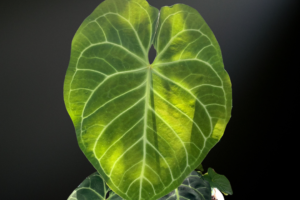
The defining feature of Anthurium moodeanum lies in its intensely pigmented foliage. New leaves frequently emerge in rich burgundy, copper-red, or chocolate-bronze tones before gradually deepening into dark green, mahogany, or nearly black mature coloration.
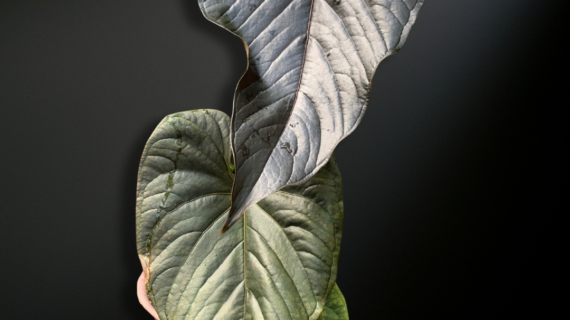
Meanwhile, the leaf surface develops a coriaceous texture that feels firm, glossy, and substantial compared with softer velvet species. Subtle venation moves beneath the surface rather than projecting sharply outward, creating a quieter and more shadowed visual language.
Unlike highly reflective silver-veined anthuriums, Anthurium moodeanum expresses sophistication through tonal layering and restrained structural drama. Under humid tropical lighting, mature specimens appear almost obsidian-like in depth.
Habitat & Origin
Native Environment
The precise wild origin of Anthurium moodeanum remains somewhat obscure within cultivation history, although the species has been associated with tropical rainforest environments of Central and South America. Several cultivated forms appear linked to humid lowland or premontane forest ecosystems where dense canopy maintains elevated humidity and subdued understory illumination.
In these environments, warm temperatures, constant atmospheric moisture, and decomposing organic debris create ideal conditions for continuous foliage development. Filtered rainforest light moves softly through layered canopy systems, encouraging elongated growth and dark foliage adaptation.
Consequently, the species evolved foliage capable of absorbing subdued tropical light while resisting environmental fluctuation through thicker leaf structure.
Ecological Adaptations
Unlike seasonal geophytic aroids, Anthurium moodeanum maintains continuous vegetative growth under stable tropical conditions. Its root system anchors itself within airy organic substrate while absorbing constant environmental moisture from surrounding rainforest atmosphere.
The leathery foliage likely contributes to moisture regulation and structural durability beneath humid understory conditions. Additionally, the dark pigmentation of emerging leaves may provide protective advantages during early development stages before the foliage fully hardens.
Because of these adaptations, mature specimens develop extraordinary depth and textural richness over time.
Why Collectors Seek Anthurium moodeanum
Rarity
Authentic Anthurium moodeanum remains relatively uncommon within mainstream cultivation, and substantial confusion persists regarding true lineage and identification. Some cultivated plants circulate under related trade names or hybrid associations, which only increases the species’ mystique among collectors.
Moreover, exceptional specimens displaying intensely dark mature foliage and strong emergent coloration remain particularly prized. Consequently, established plants with mature structure often become centerpiece specimens within curated aroid collections.
For many enthusiasts, obtaining a verified mature specimen represents an important milestone in foliage aroid cultivation.
Architectural Presence
Few foliage anthuriums create the same atmospheric depth as Anthurium moodeanum. The elongated dark leaves absorb surrounding light while maintaining a quiet sculptural authority that transforms greenhouse environments into shadowed tropical compositions.
In cultivation, the species pairs beautifully with volcanic stone, aged hardwood staging, moss-lined displays, and subdued greenhouse lighting. Beyond this, the transition from vivid burgundy emergence to dark mature foliage introduces extraordinary visual rhythm throughout the year.
Collectors frequently describe the plant as cinematic rather than ornamental.
Botanical Interest
From a botanical perspective, Anthurium moodeanum offers exceptional insight into pigmentation diversity and foliage texture within tropical epiphytic aroids. Its leathery surface, dramatic emergent coloration, and evolving tonal character distinguish it sharply from more conventional velvet-leaf species.
Unlike plants cultivated purely for oversized foliage or silver venation, this species rewards subtle observation and environmental refinement. Over time, leaf posture, pigmentation depth, and structural maturity reveal increasing sophistication.
Ultimately, the species appeals most strongly to collectors drawn toward darker aesthetics, rainforest atmosphere, and long-term botanical evolution.
Collector’s Perspective
Cultivating Anthurium moodeanum often becomes an exercise in environmental stability and patient observation. Warmth, humidity, airflow, and balanced substrate conditions all contribute directly to foliage quality and color development.
Meanwhile, each emergent leaf introduces anticipation rarely matched among dark-foliaged aroids. The dramatic transformation from bronze-red emergence into deep mature pigmentation creates a continuously evolving display that changes subtly with every growth cycle.
Over time, mature specimens develop remarkable authority and visual density. Because of this gradual progression, collectors frequently cultivate individual plants for many years as living botanical sculptures.
Foliage Characteristics
The foliage of Anthurium moodeanum ranks among the darkest and most atmospheric within cultivated anthuriums. Elongated heart-shaped blades combine leathery texture with subdued venation and evolving pigmentation that deepens dramatically as the foliage matures.
New leaves often emerge in saturated burgundy or chocolate-red tones before slowly transitioning into darker olive and near-black coloration. Meanwhile, the glossy surface reflects humidity-rich greenhouse light in constantly shifting ways.
Under ideal cultivation conditions, mature foliage develops exceptional size, density, and tonal richness that dominate surrounding tropical displays.
Comparison With Related Species
Compared with Anthurium regale or Anthurium crystallinum, Anthurium moodeanum develops firmer and glossier foliage with far less emphasis on reflective venation. While velvet species create contrast through silver patterning, moodeanum communicates sophistication through depth and shadow.
In contrast to Anthurium luxurians, which emphasizes heavily bullate texture, this species maintains smoother elongated foliage with stronger tonal transition between juvenile and mature growth. Because of this, advanced collectors frequently regard Anthurium moodeanum as one of the most atmospheric dark-foliaged aroids in cultivation.
Additionally, its evolving coloration creates visual drama that changes continuously over time rather than remaining static.
Looking for Rare Amorphophallus Species?
Explore our collection of rare tubers, seeds, and exotic aroids directly from Indonesia. Carefully prepared for international shipping.