Anthurium macrolobium — The Deep-Lobed Sentinel of Tropical Rainforests
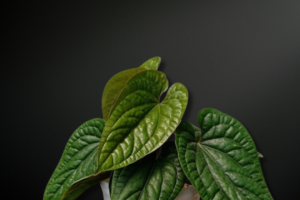
Among the more architecturally dramatic foliage aroids in cultivation, Anthurium macrolobium commands attention through immense lobed foliage, elongated structure, and an unmistakably primal rainforest presence. The species feels ancient in character — less ornamental than ecological — as though each mature leaf evolved directly from the shadowed canopy systems of untouched tropical forests.
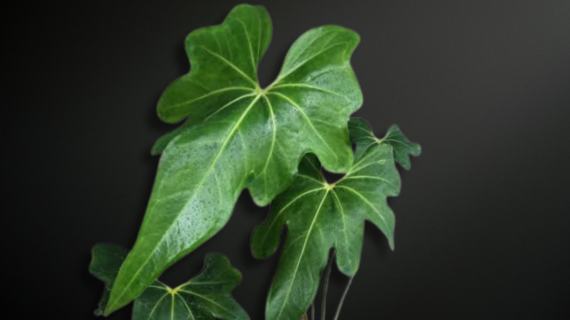
Unlike velvet anthuriums that captivate through reflective texture and silver venation, Anthurium macrolobiumexpresses its identity through proportion, incision, and movement. The deeply lobed foliage stretches outward with remarkable structural tension, creating silhouettes that resemble tropical wings suspended in humid air. Meanwhile, mature specimens develop a broad spatial authority capable of transforming greenhouse environments into layered rainforest compositions.
For collectors, Anthurium macrolobium represents one of the more immersive examples of large-form tropical foliage architecture. It rewards patience not with fleeting floral spectacle, but with increasingly monumental foliage that evolves year after year beneath stable tropical conditions.
Botanical Significance
Collector Value
Within advanced aroid collections, Anthurium macrolobium remains highly regarded for its dramatic foliage proportions and deeply sculptural mature form. Although less commonly cultivated than velvet-leaf species, mature specimens possess a commanding botanical presence that appeals strongly to collectors focused on large architectural aroids.
Moreover, the species develops increasing complexity with age. Juvenile foliage appears comparatively restrained, yet successive leaves gradually elongate, deepen in lobe formation, and expand dramatically in overall scale. Consequently, established specimens become increasingly valuable as they approach mature rainforest proportions.
For collectors, the species offers long-term transformation rather than immediate perfection. Every growth cycle introduces stronger incision, broader structure, and greater spatial authority.
Distinctive Morphology
The defining characteristic of Anthurium macrolobium lies in its immense deeply lobed foliage carried on elongated petioles with remarkable balance and elevation. Mature leaves frequently develop broad lateral divisions that create a wing-like silhouette unlike the more compact forms seen in many ornamental anthuriums.
Meanwhile, the foliage surface carries a smoother and more leathery texture compared with velvet species. Light moves fluidly across the blades, emphasizing contour and structural depth rather than reflective veining.
Unlike species prized for dramatic color contrast, Anthurium macrolobium communicates sophistication through scale, movement, and rainforest geometry. Under humid greenhouse lighting, mature plants appear almost prehistoric in atmosphere.
Habitat & Origin
Native Environment
Anthurium macrolobium originates from humid tropical forests of Central and South America where dense canopy systems maintain high atmospheric moisture, warm temperatures, and filtered understory illumination throughout the year.
In habitat, the species develops terrestrially and occasionally hemi-epiphytically among decomposing organic debris, moss-covered forest structures, and richly aerated tropical substrate. Rainfall remains frequent while constant airflow stabilizes humidity across the understory.
Consequently, the species evolved to thrive within stable rainforest ecosystems capable of supporting immense continuous foliage production.
Ecological Adaptations
Unlike seasonal geophytic aroids that retreat into dormancy, Anthurium macrolobium maintains continuous vegetative growth under favorable tropical conditions. Its extensive root system anchors the plant within organically rich substrate while supporting the production of increasingly large foliage over time.
The deeply lobed leaf structure may assist with airflow management and water runoff beneath saturated rainforest conditions. Additionally, elongated petioles elevate the foliage into shifting understory light while minimizing overlap between mature blades.
Because of these adaptations, mature specimens develop extraordinary spatial structure and rainforest presence.
Why Collectors Seek Anthurium macrolobium
Rarity
Although recognized among serious aroid enthusiasts, Anthurium macrolobium remains relatively uncommon in cultivation compared with more commercially distributed velvet species. Mature specimens with fully developed lobed foliage appear even less frequently due to the time and environmental stability required for proper maturation.
Moreover, the species occupies a distinct aesthetic category within anthurium collections. Rather than emphasizing decorative venation or compact presentation, it offers dramatic tropical architecture rooted in ecological authenticity.
For many enthusiasts, cultivating the species to maturity represents a long-term botanical pursuit focused on scale, structure, and rainforest realism.
Architectural Presence
Few foliage aroids create the same sense of spatial expansion as Anthurium macrolobium. Mature leaves project outward with remarkable breadth and movement, transforming growing spaces into immersive tropical environments rich with shadow and structural layering.
In cultivation, the species pairs beautifully with volcanic stone, hardwood staging, moss-covered structures, and vertically layered greenhouse compositions inspired by lowland rainforest ecosystems.
Beyond this, the gradual enlargement and deepening of each successive leaf introduce a rhythm of continual transformation deeply appreciated among experienced collectors.
Botanical Interest
From a botanical perspective, Anthurium macrolobium offers exceptional insight into foliage adaptation and structural diversity within tropical rainforest aroids. Its deeply incised leaves, elongated growth habit, and large-scale architecture distinguish it sharply from more compact ornamental relatives.
Unlike species cultivated primarily for velvety texture or silver venation, this plant rewards environmental stability and long-term observation. Over time, changes in lobe depth, blade expansion, and petiole length reveal increasing sophistication.
Ultimately, the species appeals most strongly to collectors drawn toward monumental foliage, ecological authenticity, and immersive tropical atmosphere.
Collector’s Perspective
Cultivating Anthurium macrolobium often becomes an exercise in spatial cultivation and environmental consistency. Warmth, humidity, airflow, and stable root conditions all contribute directly to foliage scale and structural refinement.
Meanwhile, each new leaf introduces anticipation shaped by gradual architectural evolution. Young plants remain relatively restrained; however, mature specimens develop increasingly dramatic proportions with every successive growth cycle.
Over time, established plants acquire extraordinary authority within greenhouse settings. Because of this progression, collectors frequently cultivate individual specimens for many years as evolving botanical centerpieces.
Foliage Characteristics
The foliage of Anthurium macrolobium ranks among the more structurally dramatic within large-form tropical anthuriums. Deeply lobed blades combine leathery texture with elongated proportions and powerful spatial movement that intensify substantially with maturity.
New leaves frequently emerge in lighter bronze-green tones before gradually hardening into deeper mature coloration. Meanwhile, shifting humidity and filtered tropical light continuously emphasize the sculptural contours of the foliage.
Under ideal cultivation conditions, mature leaves develop immense proportions capable of dominating surrounding tropical compositions entirely.
Comparison With Related Species
Compared with Anthurium pedatoradiatum, which develops more fingered radiating foliage, Anthurium macrolobium expresses broader and heavier lobe structure with stronger rainforest mass and presence.
In contrast to velvet species such as Anthurium regale or Anthurium crystallinum, this plant emphasizes architecture and silhouette over reflective surface texture. Because of this, advanced collectors frequently regard Anthurium macrolobium as one of the more ecologically expressive foliage anthuriums in cultivation.
Additionally, its immense mature structure contributes exceptional value within large tropical greenhouse collections.
Looking for Rare Amorphophallus Species?
Explore our collection of rare tubers, seeds, and exotic aroids directly from Indonesia. Carefully prepared for international shipping.